Author Archives: shutterbugjj

Kakadu and Litchfield National Parks

I think that everyone that did the whole 10 day tour agreed that these last 3 days were the best. Partly because the area where the permanent tents are located is flooded and crocodiles are using the tents and partly because of the beautiful but wet scenery. They put us up in air conditioned cubicles, 2 beds and 2 people to each one. Just enough room for a set of bunk beds and that was it. But there were no mosquitos and there was a/c, so most people were happy.

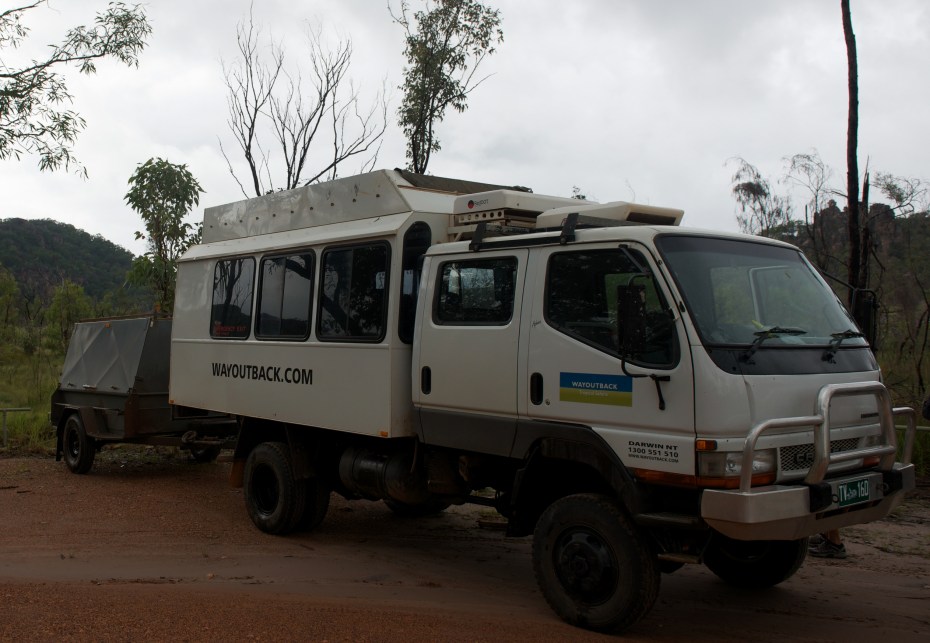
#3 mode of trans.-1Our mode of transportation for this part of the trip. When it rained, everyone but the driver got wet inside. Richard, our guide, loved to blast around at what I thought was a high speed for off road. I sat at the back for one day and I’m sure compressed part of my neck muscles from the vehicle hitting ruts in the road at high speed. He also delighted in not slowing down at sections of the road that were flooded. This would create a fan of water on each side of the truck that reached way beyond the sides of the road. You could have drenched hundreds of people if they were standing there.

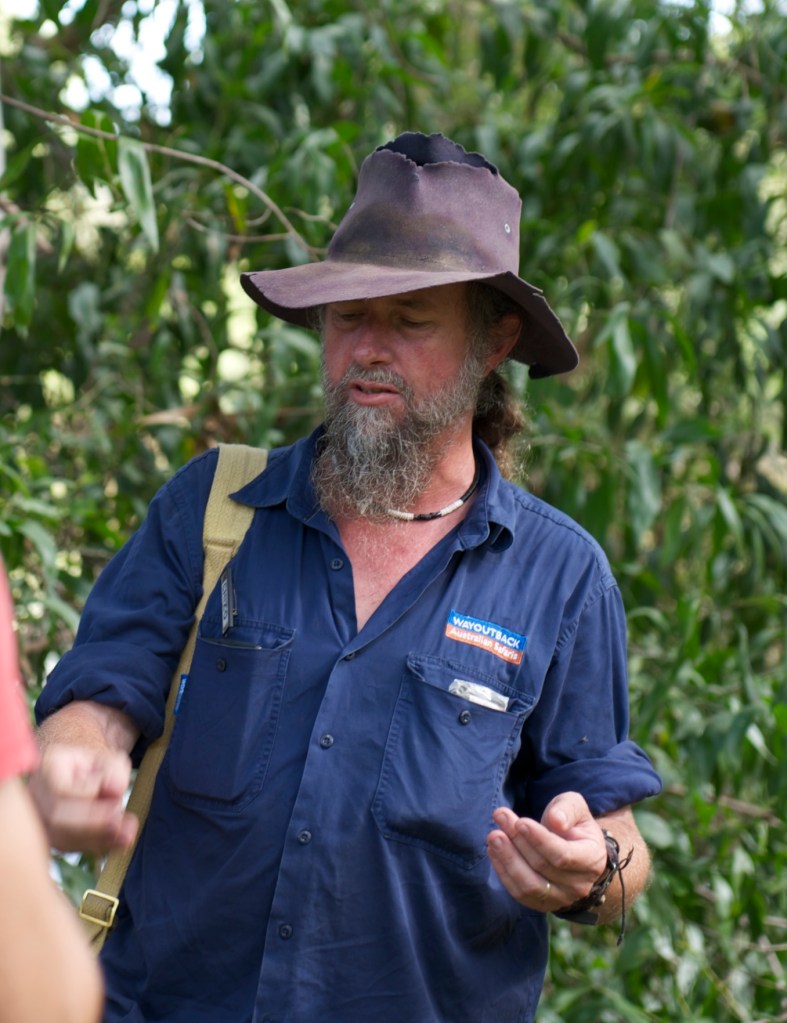
Richard #3 guide-18 Richard, our guide for the third leg of the tour. The best cook of the 3 tour guides. And a Kiwi, from New Zealand.

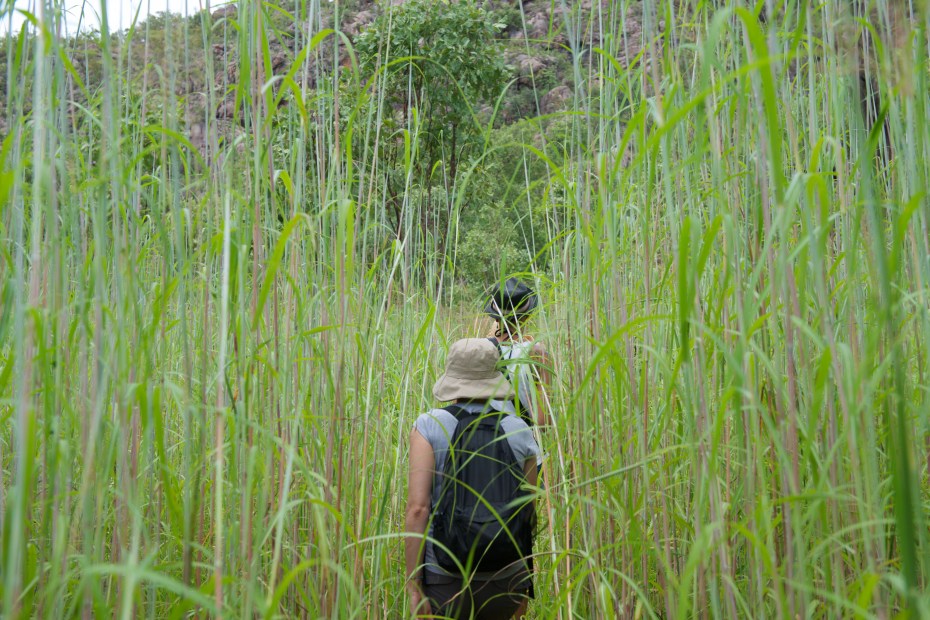
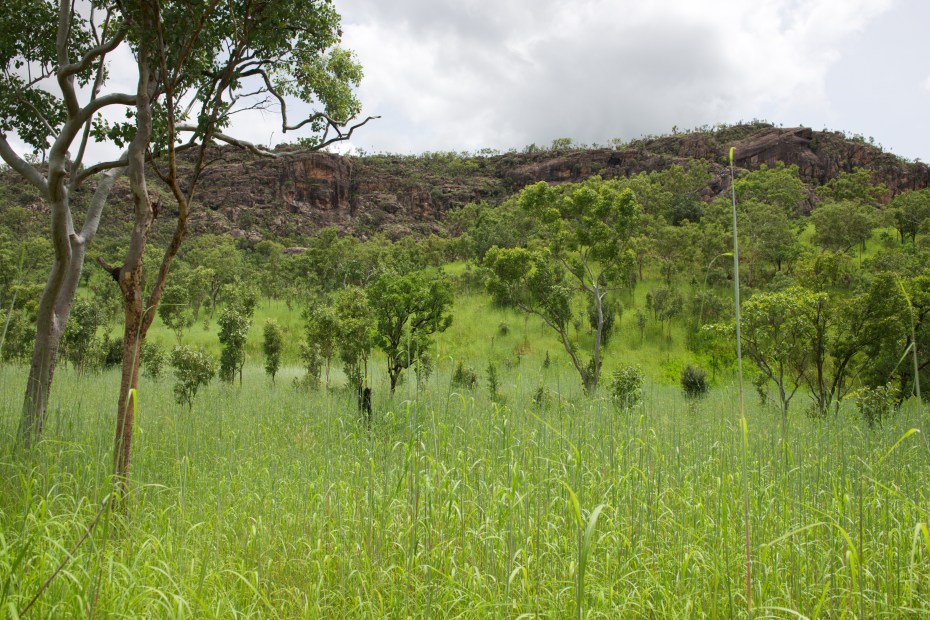
walking thru tall grass-29 Some of the tall grass that has grown due to all of the rain. The locals of this area say it has 6 seasons instead of 4. They are: 1. Cool weather time, May to June, 2. Early dry season, June to August, 3. Hot dry season, August to October, 4. Pre monsoon season, October to December, 5. Monsoon season December to March, 6. Harvest time, April.

Driving through the flooded road at about 40 miles per hour! the northern bush-27 Grass lands

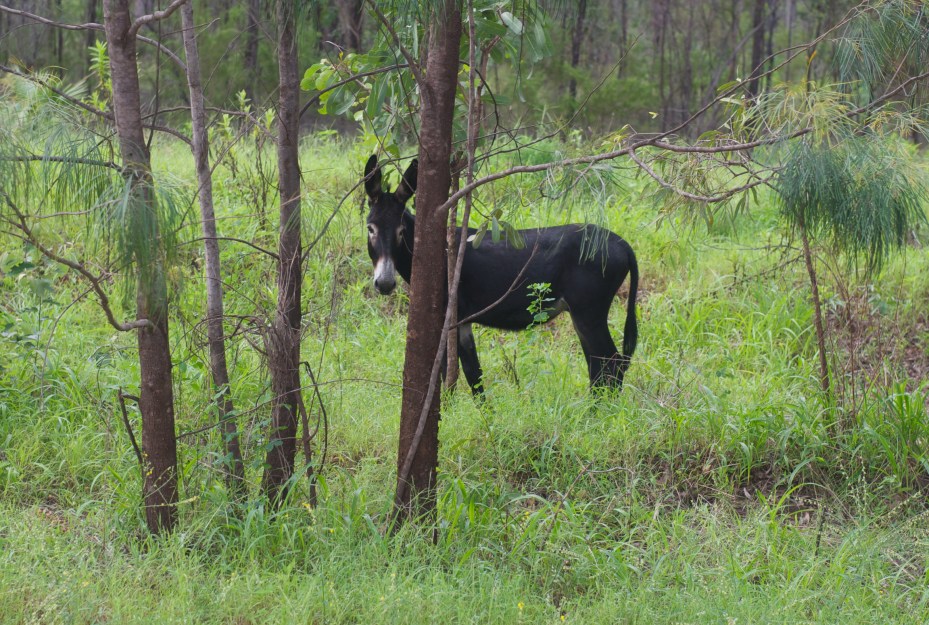
wild donkey-35 Wild donkey

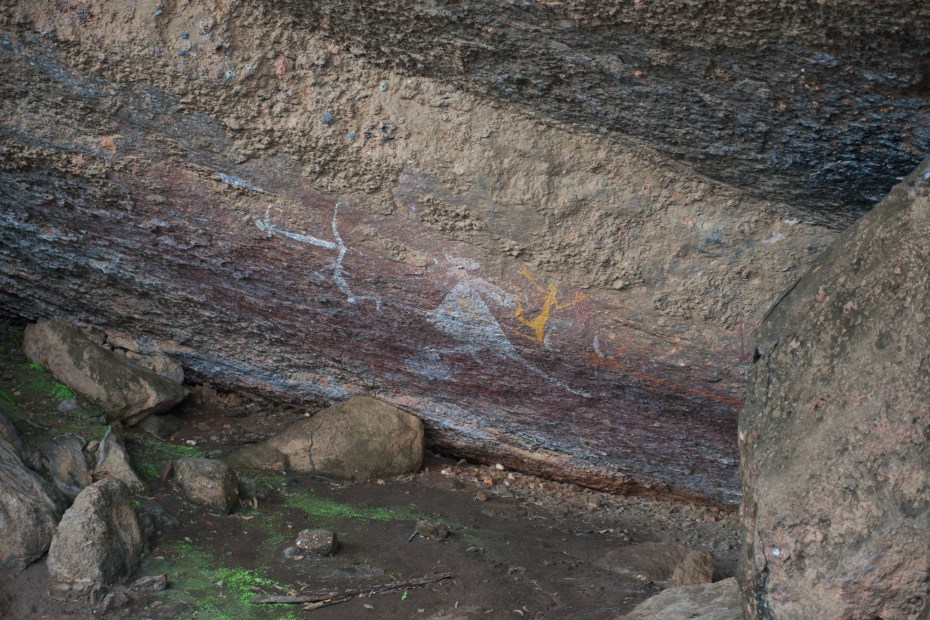
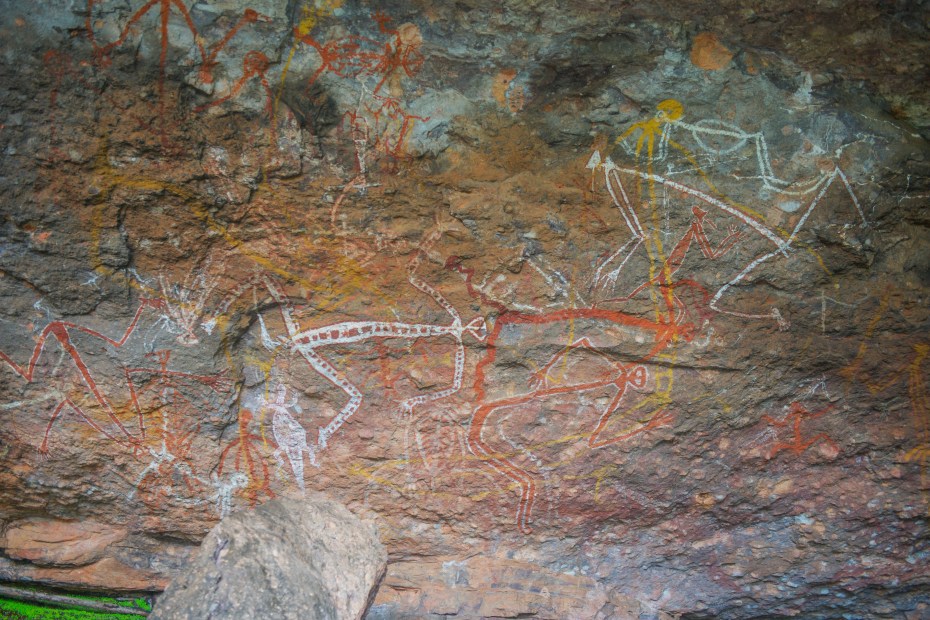
rock art-23 Rock art

rock art close up-22

rock art 1-20

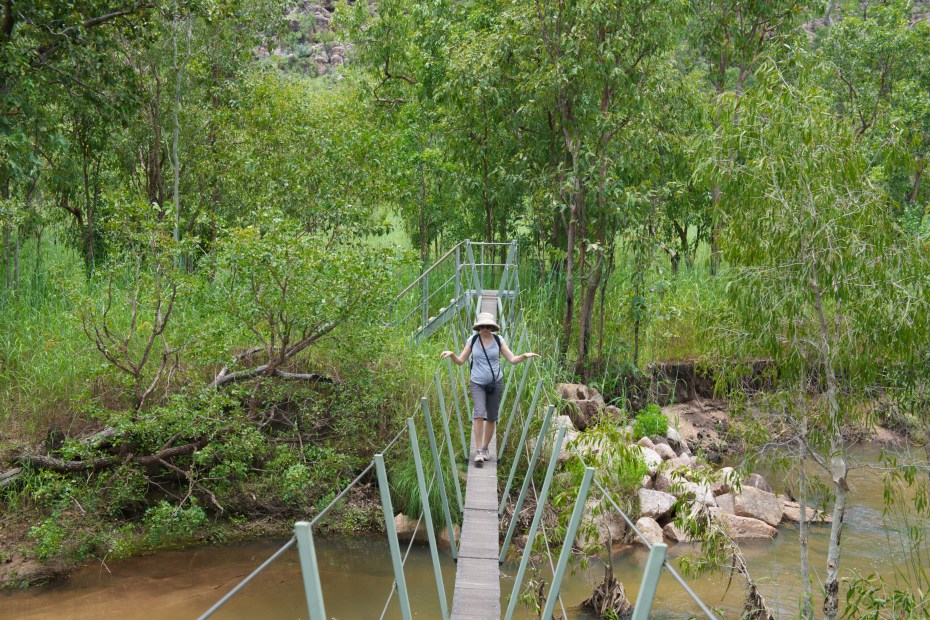
river crossing-19 crossing creek

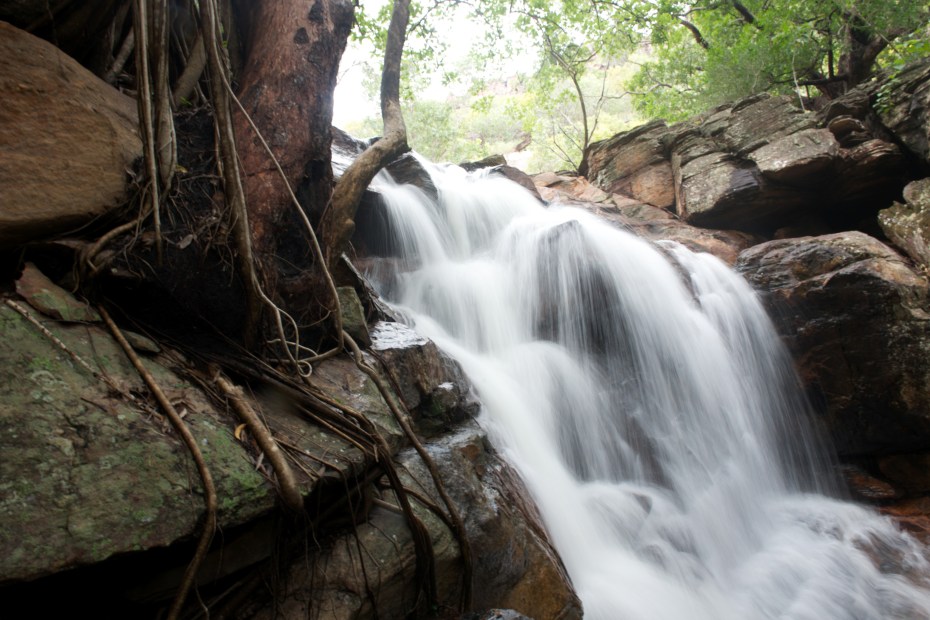
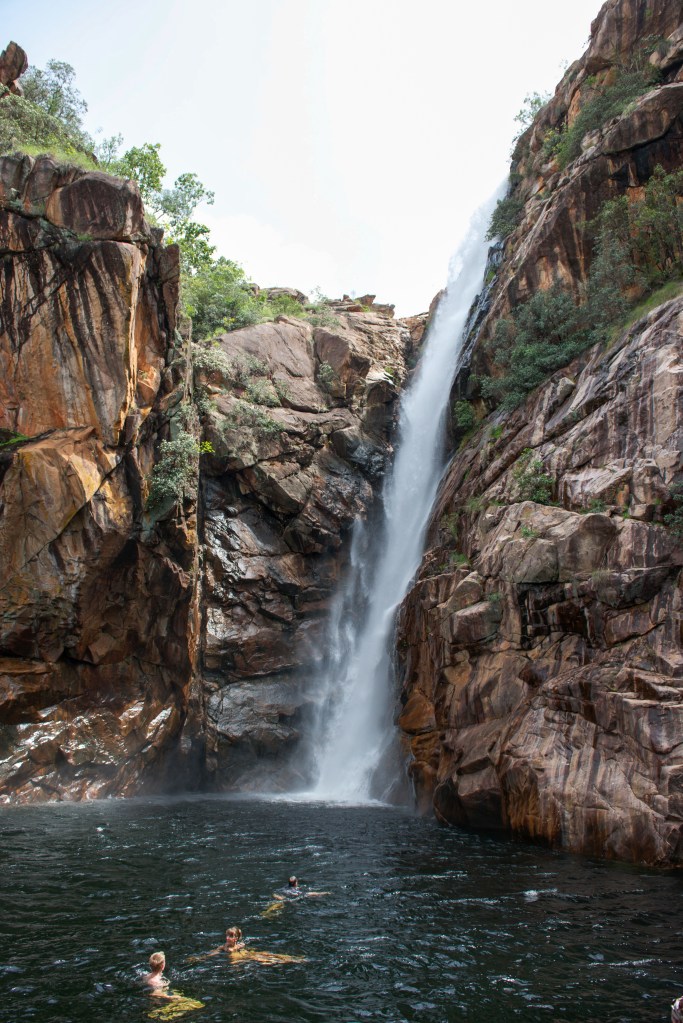
waterfall-33

red grasshopper-17 rare red grasshopper that only eats one kind of plant

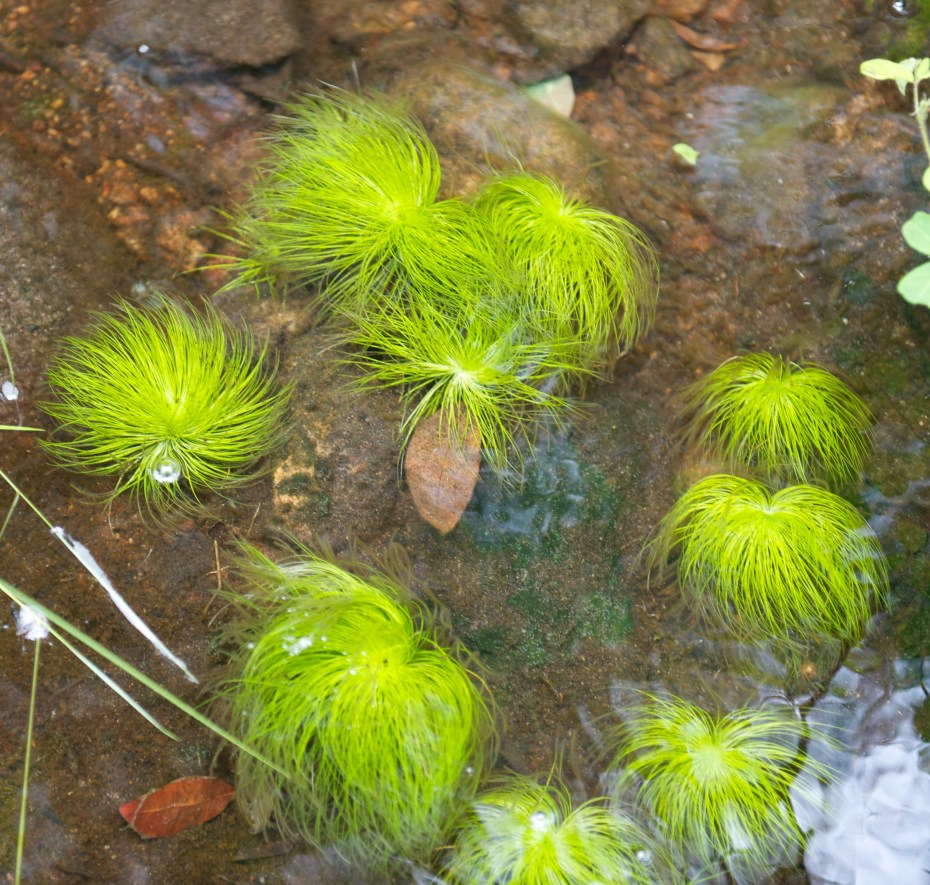
water grass dancing-32water grass dancing

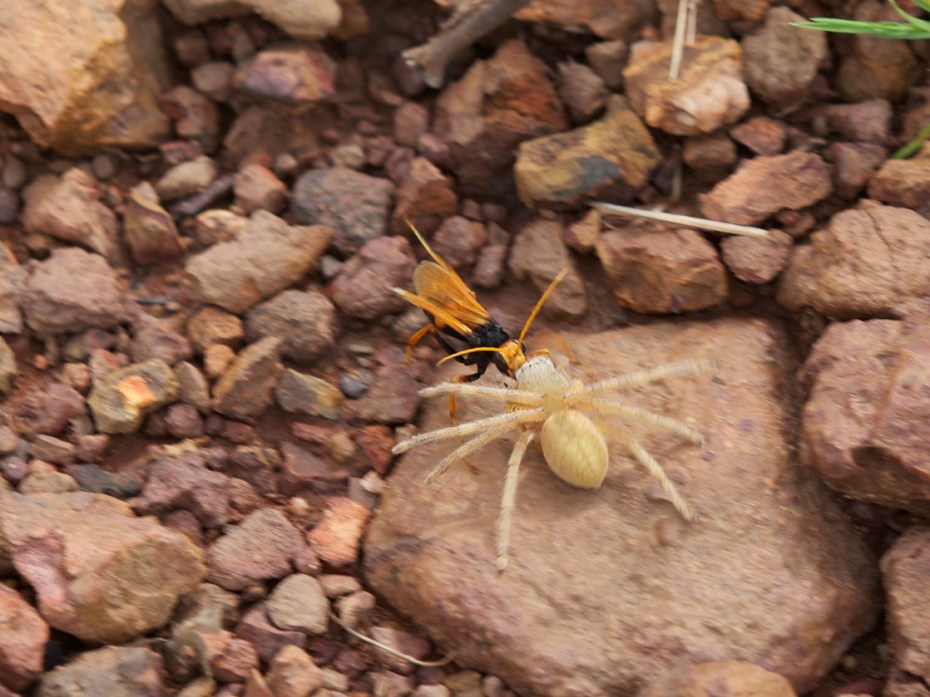
wasp dragging spider-31wasp dragging spider back to it’s nest so that it can lay an egg in it and when the egg hatches the spider will be food for the newly hatched wasp

red flower-16

motor car falls-14

motor car falls 2-13motor car falls (not sure why they call them this, obviously a white persons description)

flower & ant-8

Wangi Falls-30Wangi Falls

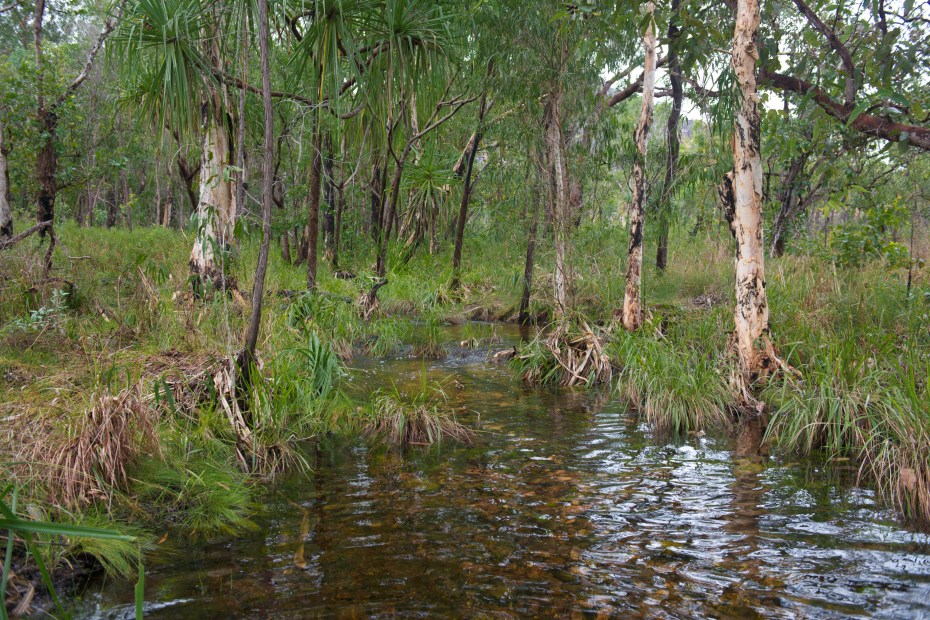
creek-5

Gold snake in tree-9Golden Snake in tree

Yellow River wetlands-36Yellow River wet lands

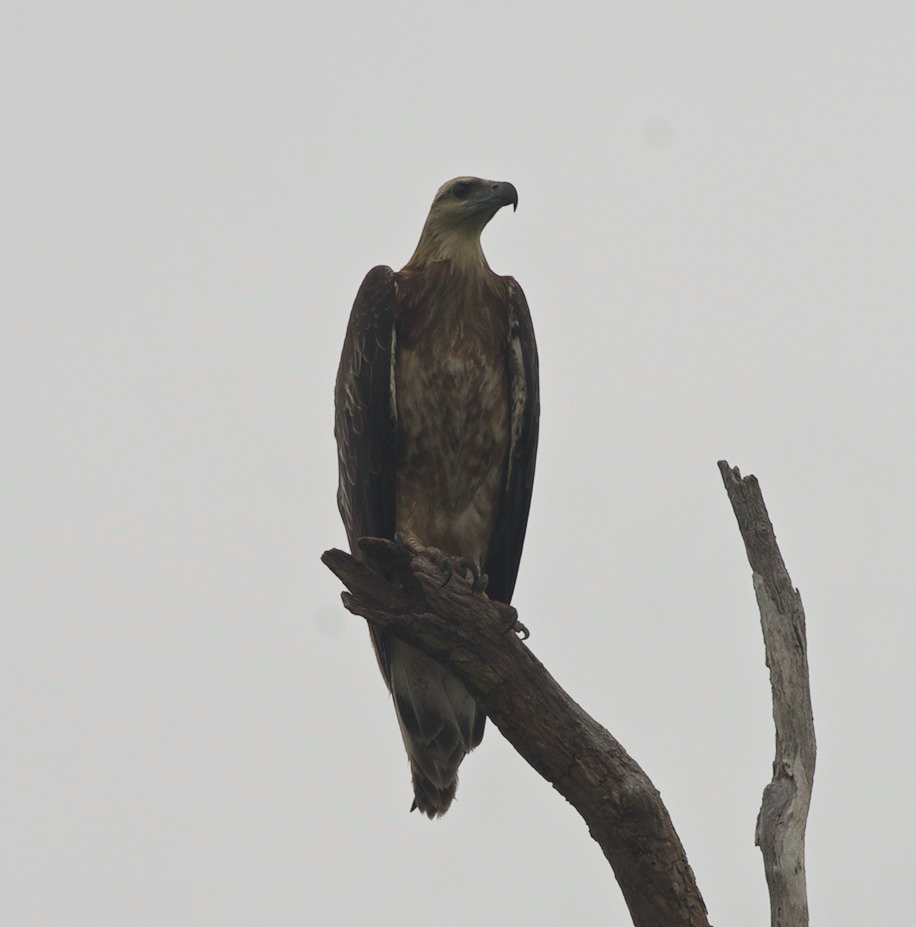
young Eagle-37young eagle

Sea Eagle-24Sea Eagle

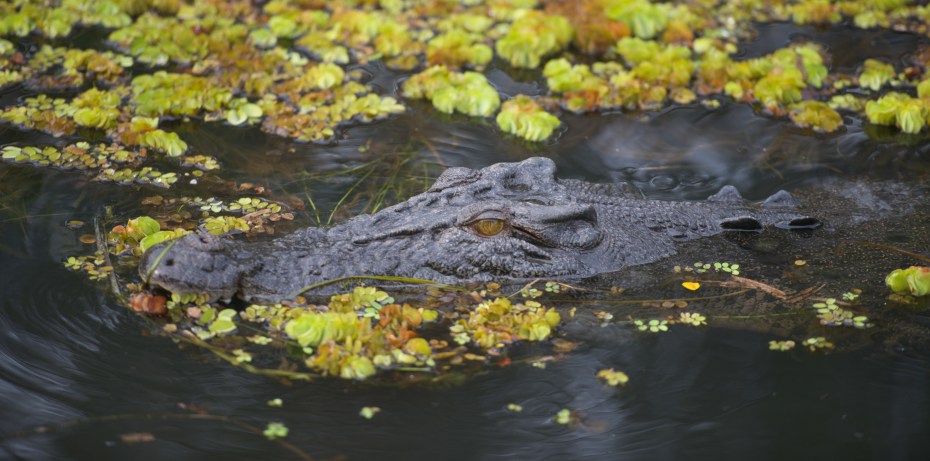
Crocodile-7small Crocodile

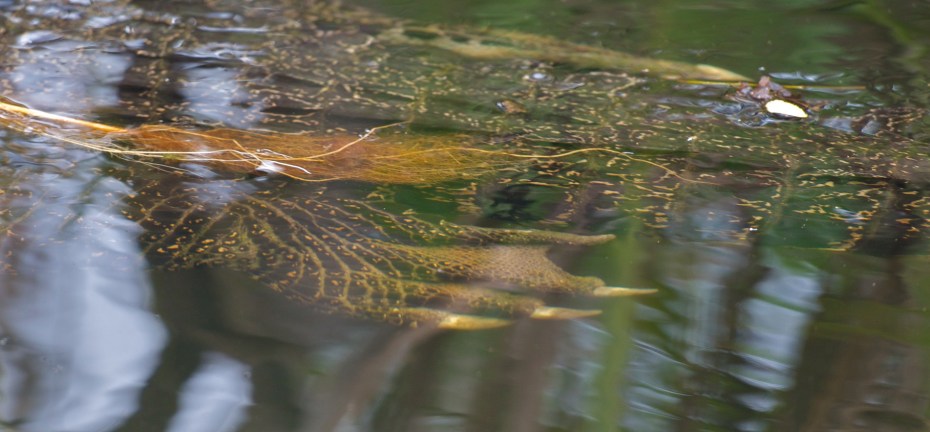
Crocodile claw-6Crocodile claw

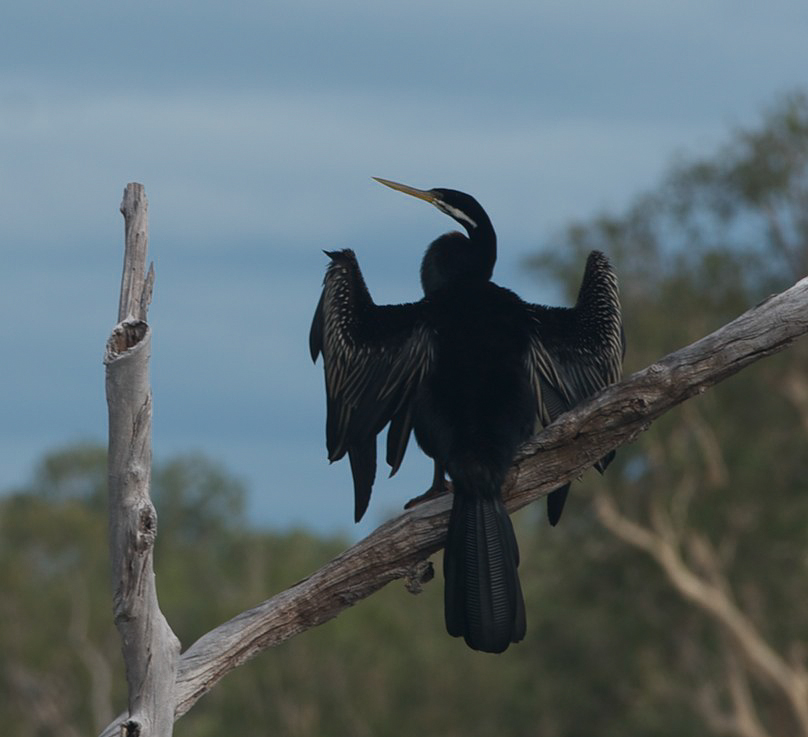
Cormarant family-4

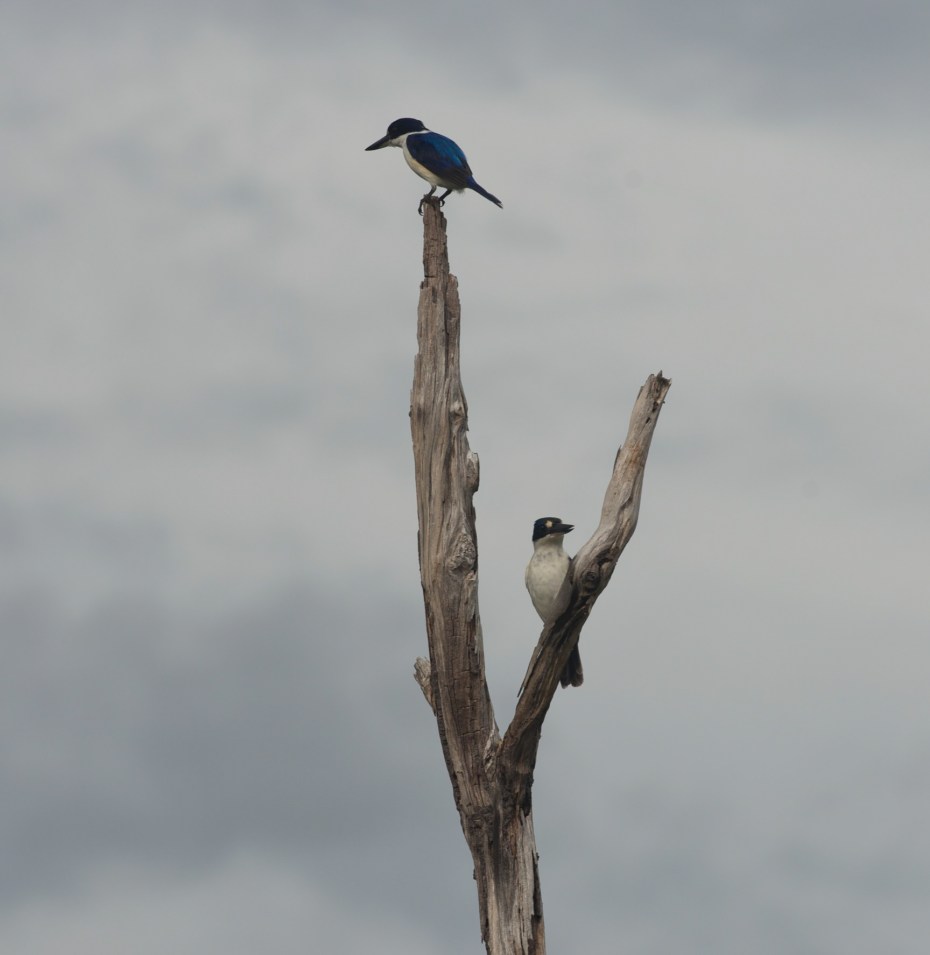
2 Kingfishers-22 Kingfishers

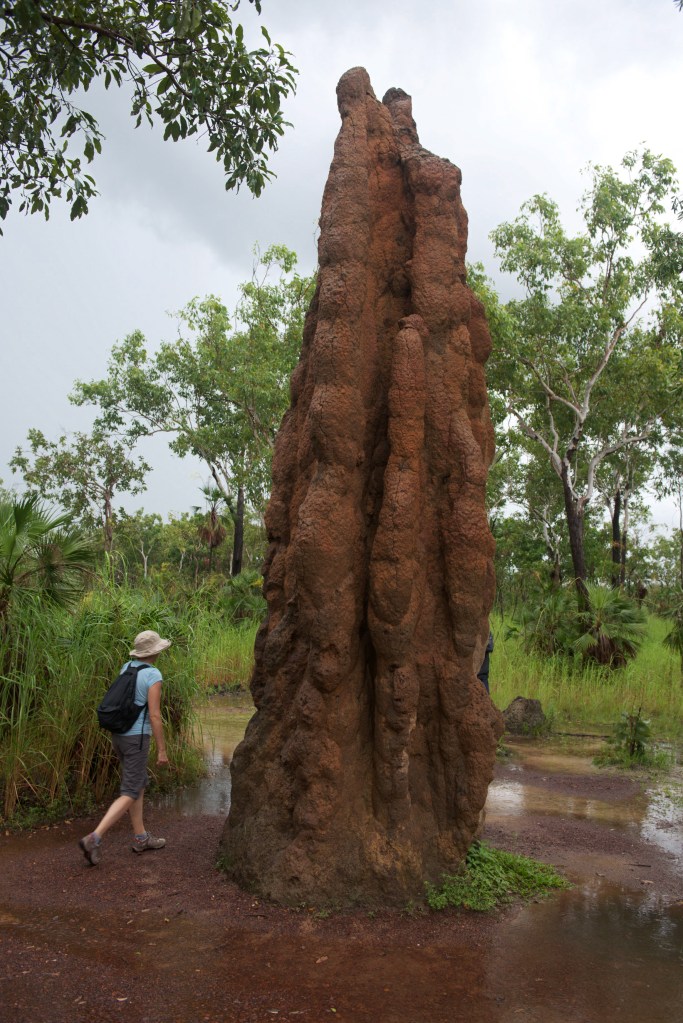
Termite mound-26 gigantinormous Termite mound

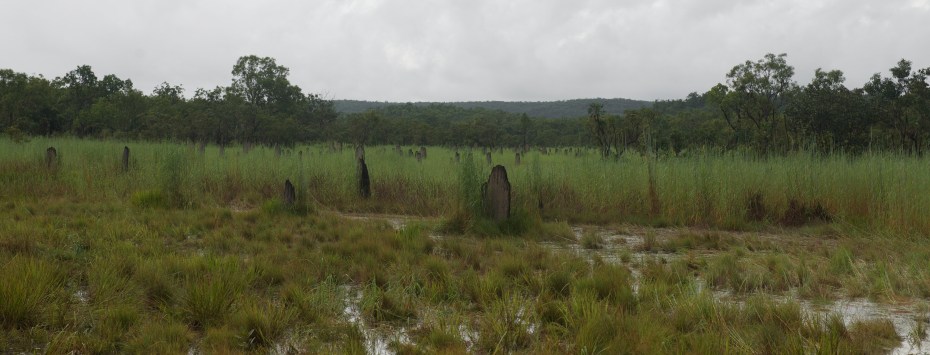
magnetic termite mounds-12“magnetic” termite mounds. Aligned north and south to take advantage of the suns’ travel through the sky. These are only found in this area and nowhere else in the world.

magnetic termite mound 1-11They appear to be about 4-5 feet tall. We couldn’t get any closer to them to tell. We were told that there are people who knock them over for fun, so they are trying to keep them safe. Some fun, knocking over a creatures home that took years to build.

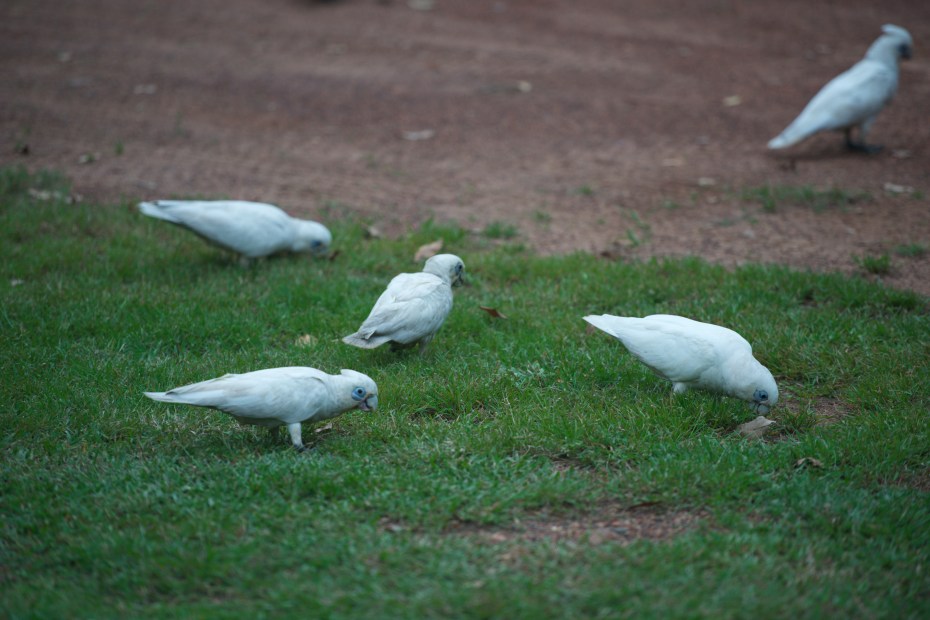
wild Cookatoos-34wild Cockatoos    There are all kinds here. Crested, black, etc. I fly to the east coast tomorrow via Cairns. More photos to follow………

Categories: Uncategorized | Leave a comment

North of Alice Springs it’s hot, humid, raining and flooding

Just north of Alice Springs is the Tropic of Capricorn. From around that point north, the landscape gradually changed from desert scrub brush to lush greenery. And lots of water in the top third of the country. And way less flies and mosquitos. It’s 950 miles (1500km) from Alice Springs to Darwin. We traveled that distance in 3 days. Stopping about every 2 hours at what are called stations, watering holes, pubs, etc. Some of them are working cattle ranches with facilities for truck drivers and tourists. And everything you buy at these places, and rightfully so, is expensive. There is a lot of the same scenery between these stops, so most people on the tour slept. Not me, I didn’t want to miss a thing. The photos that follow are from the second leg of the trip, Alice Springs to Darwin. I will post the third leg, which is around the Darwin area, separately.

new mode of transportation-2

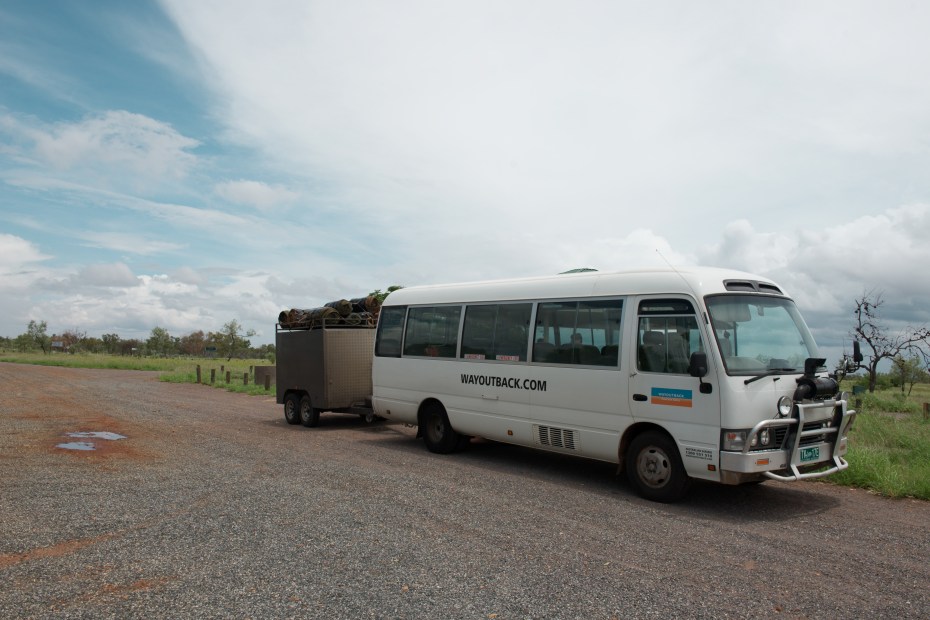
Mode of transportation for this leg of tour. 16 of us on a bus that seats 22. So there was a little bit of extra leg space.

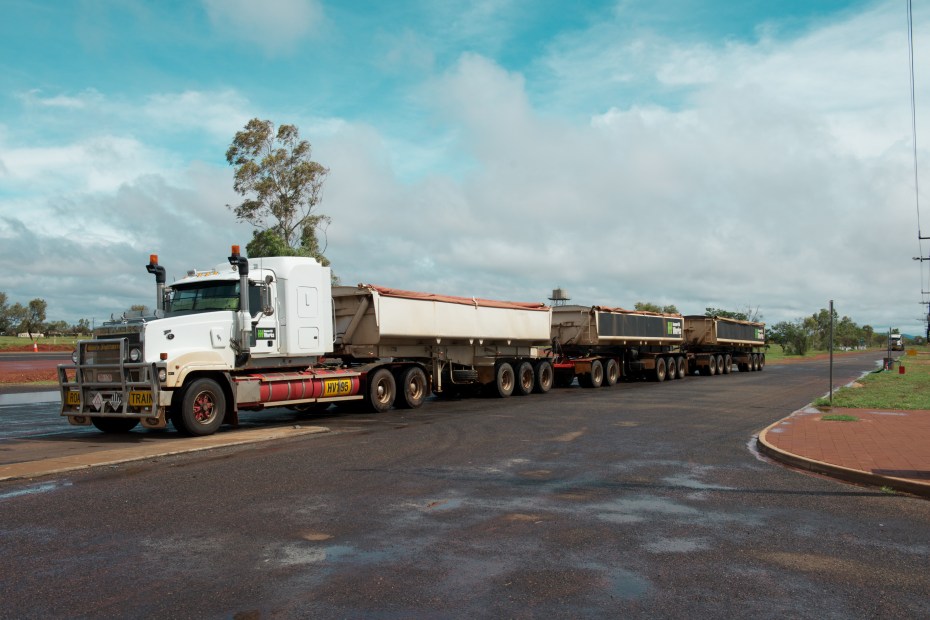
road train-1These trucks are called “road trains”. This one has 66 wheels. That’s about $30,000 worth of tires. Some of the propane trucks have 70 wheels! This one holds about 800 gallons of fuel.

road kill-10Striping over “road kill”

name tag-7To help everyone remember names, the tour guide gave us markers to draw on the windows at our seats

Chizo, our guideChizo, our tour guide. Quite a character with loads of stories and music

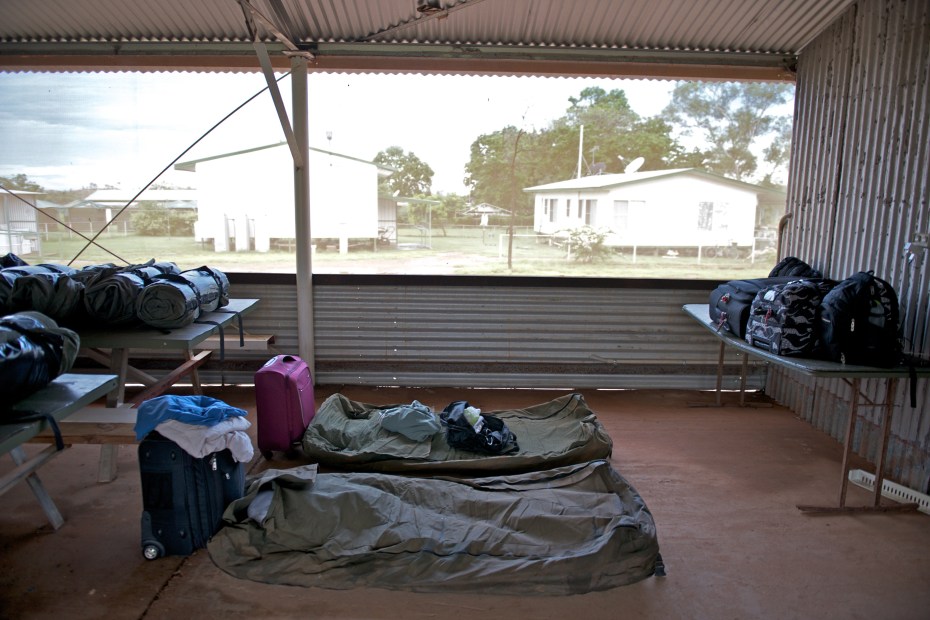
swags-8At one of our stops, it had been raining and the ground was very wet and muddy. The tents weren’t usable so most of us slept on damp concrete under a tin roof. And everyone got bitten by mosquitos. The showers and toilets worked fairly well here. Those are the famous “swags” we slept in. Canvas bed rolls with a thin mattress inside. Much better than just sleeping on the ground in a sleeping bag.

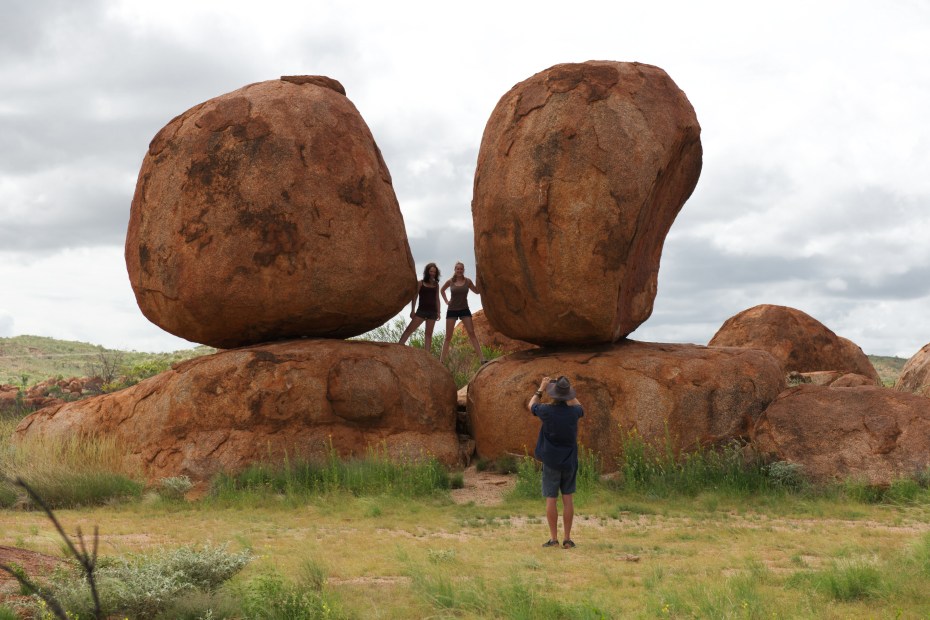
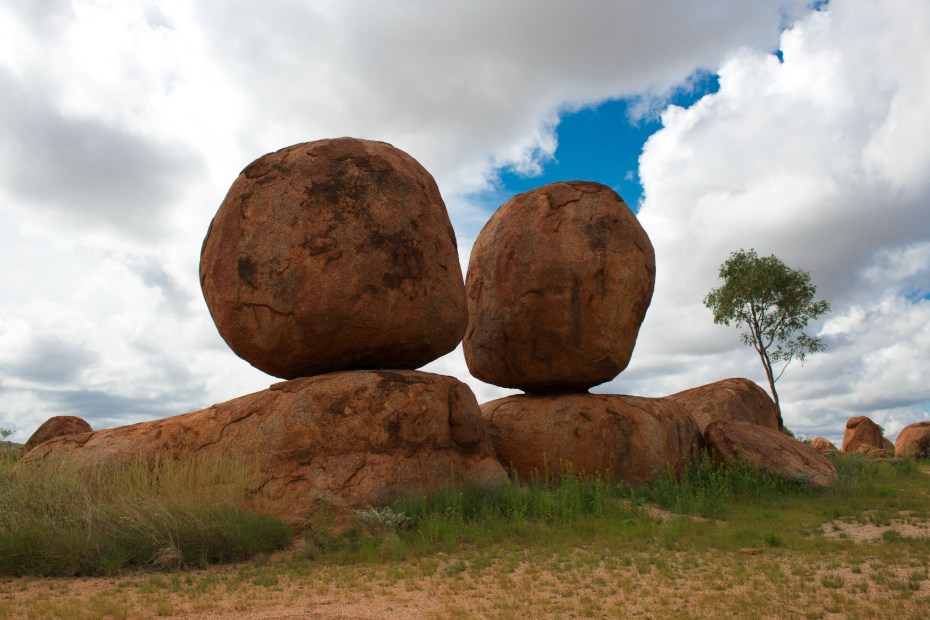
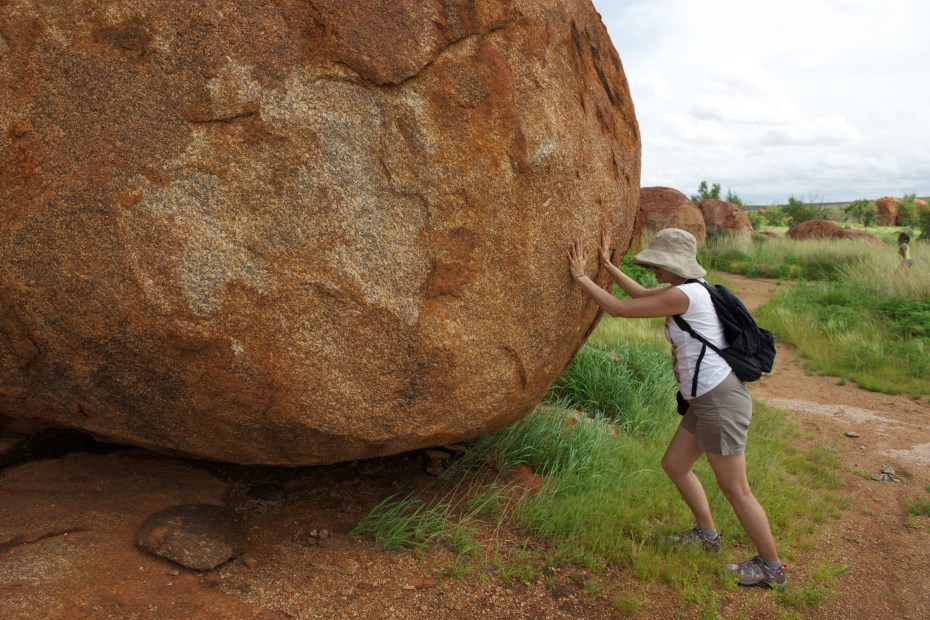
more marbles-5Devils Marbles

marbles-6More marbles

Devils marbles-4Moving marbles into position

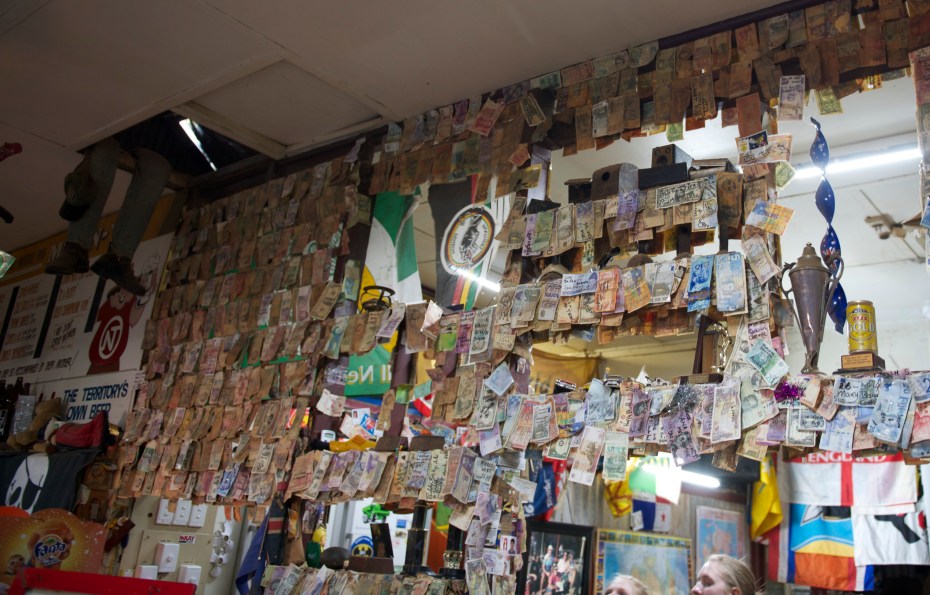
Daly Waters PubWorld famous Daly Waters pub

Daly Waters pub 1Money from all over the world inside Daly Waters

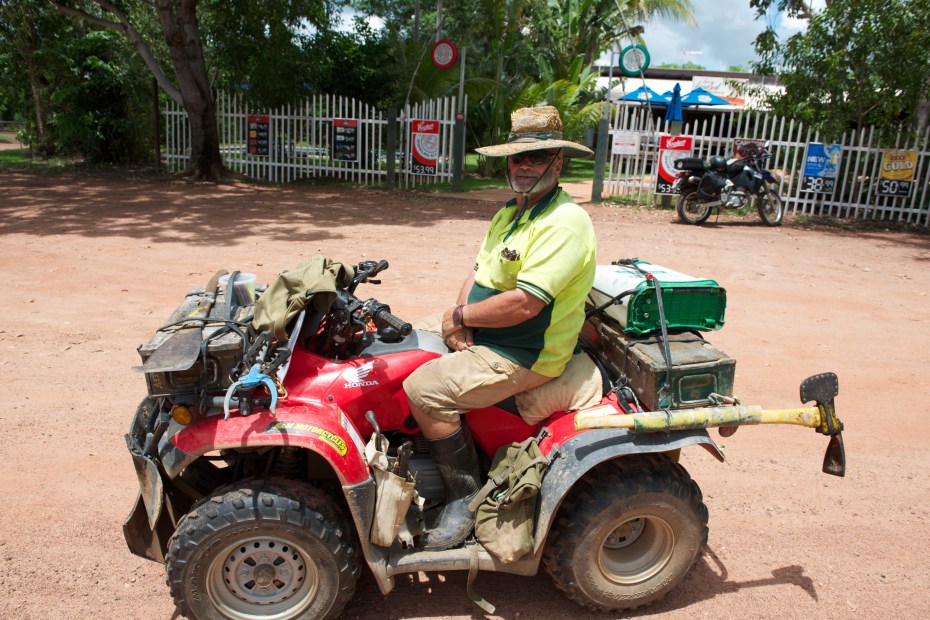
maint. man & quad-22Local maintenance mate that has traveled all over the world. But not on his quad

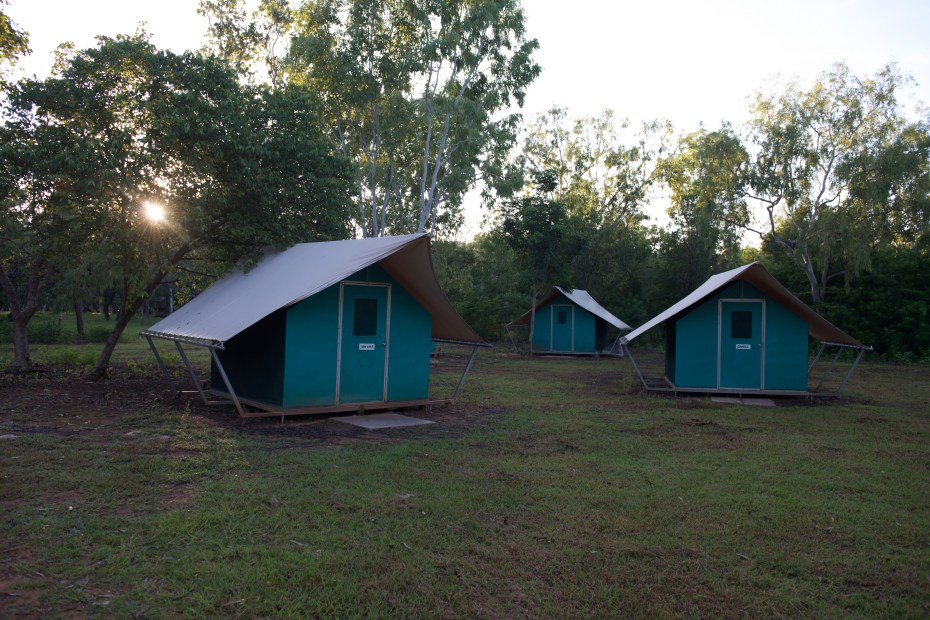
permanent tents-15Our second night of the second leg was spent in these permanent tents. Some had lights and fans. No showers though. The water is very alkaline and had plugged up all of the shower heads and lines to them.

termite mound-24This is a termite mound. As we left Alice Springs they were about 1 1/2 ft tall (1/2m). This one is around 10 ft tall (3m). They build them at the rate of 4 inches a year. The further north we go, the larger they get. This is due to the fact that there is more food available to support more termites. These termites look like ants and feed on grass. The mounds are an engineering marvel. A third of the total structure is underground. When it’s hot out, cool air comes up from underground to cool the whole mound. At night, the whole structure retains heat. The worker termites that build these are purposely blinded as soon as they hatch. Not a lot is known about these mounds and theories differ as to how they are built. In the next leg of the trip, there are some that are even more amazing.

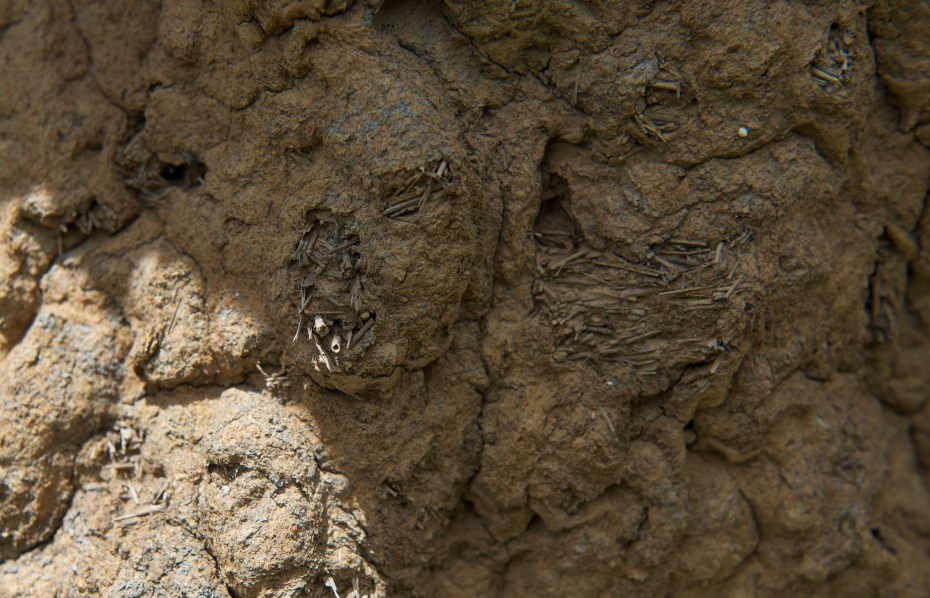
what termite mounds are made of-25Termite mounds are made of straw, saliva and termite poo

termite mound blocks-23These blocks were made from abandoned termite mounds. Very similar to adobe bricks and serve the same purpose. Cool during the day and heat retaining at night.

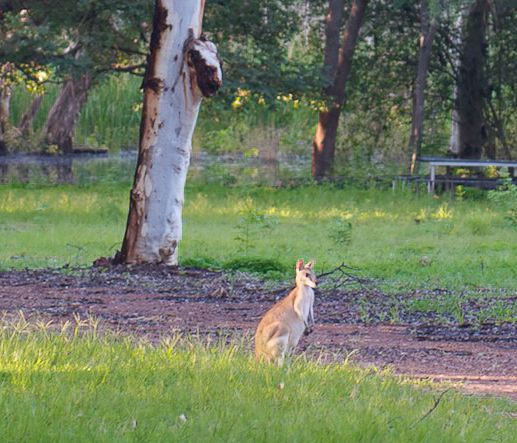
Walaby-17

Walaby

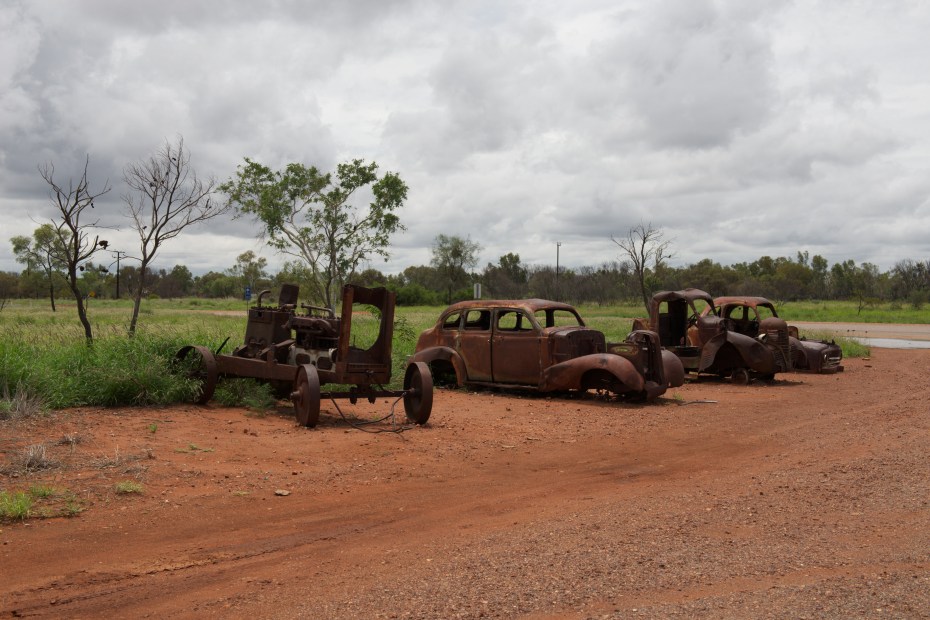
hope we don't end up like this-3A few vehicles that didn’t make it

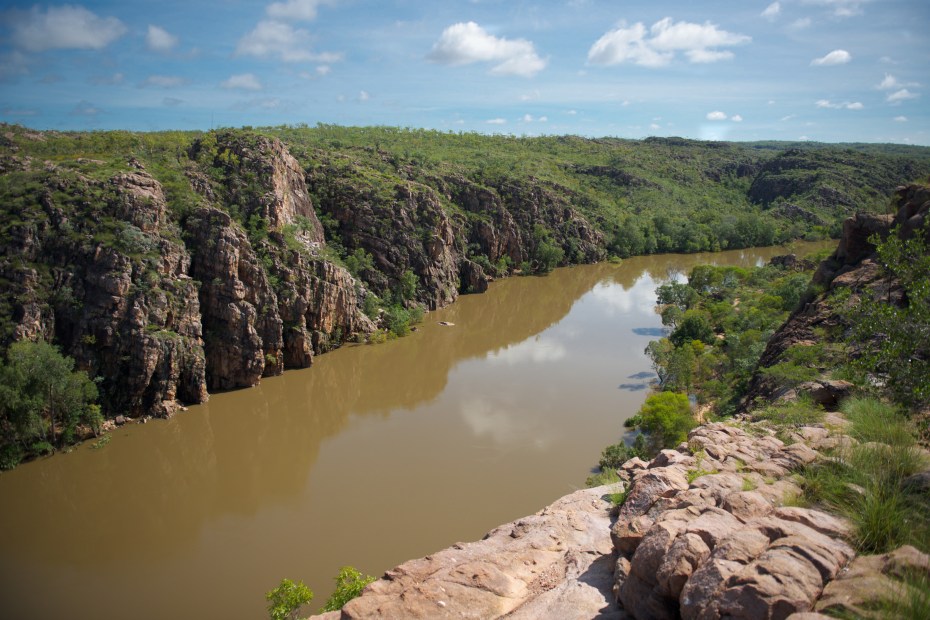
Katherine gorge-20Katherine Gorge. In the dry season this is just a trickle

flooded road-13Road closed due to flooding. This area has had more rain in the last 2 months than it has had in the last 6 years

Aussie 4wd & trailerA lot of the vehicles that travel this area are well equipped for flooded and muddy roads. Note the winch and snorkel.

Categories: Uncategorized | Leave a comment

It’s Hot in Australia at the moment!

Well I’ve finally made it to the land of Aus! After 3 hours on a bus, 22 hours of flying, 15 hours in various airports, 4 cities, and 4 countries, I’m in Australia.

I arrived at Sydney but only had an overnight stay at my friend Roberts place and a dinner with a few other friends before I left the next day. So I didn’t take many photos of Sydney yet. Below is the view from Roberts window looking out to Mosman Bay. His place is literally right on the water. Thats one of many ferries that ply the harbor waters.

Roberts view

The day after I arrived Rebecca and I flew from Sydney to Ayers Rock/Uluru and spent the night there awaiting the start of our trip the next day. Rebecca and I met at Kopan Monastery in Nepal 6 years ago. She lives in Sydney. The vehicle below will be our mode of transportation for the next 3 days. We will be on a ten day trip that consists of 3 separate tours combined.

4X4 people mover

6×4 people mover. It seats 22 people. And is fairly comfortable and has a/c. Which is a necessity at this time of year because it has been 100 degrees (38c) or more everyday since I arrived. And it has been semi humid. We will be heading north to the coast over the next 7 days and as we get closer to the coast more humidity and I hear cyclones are a good possibility.

Flies and mosquitoes as the sun comes up. Only millions of flies during the day. Flies and mosquitoes as the sun sets.

Our first day and night was spent at Ayers Rock. Other wise known by the original people as Uluru. Since we are on their land, I will use the name they prefer, when I refer to this sacred site.

Uluru is one of Australia’s most recognisable natural landmarks. The sandstone formation stands 348 m (1,142 ft) high, rising 863 m (2,831 ft) above sea level, with most of its bulk lying underground, and has a total circumference of 9.4 km (5.8 mi).[5] Both Uluru and the nearby Kata Tjuta formation have great cultural significance for the Aṉangu people, the traditional inhabitants of the area, who lead walking tours to inform visitors about the local flora and fauna, bush foods and the Aboriginal dreamtime stories of the area.
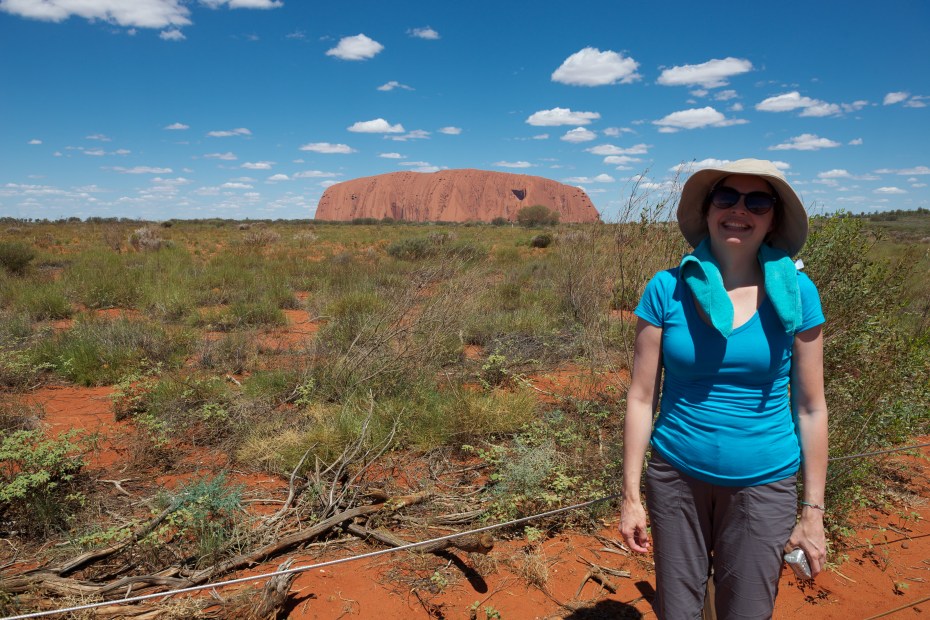
Rebecca and Uluru
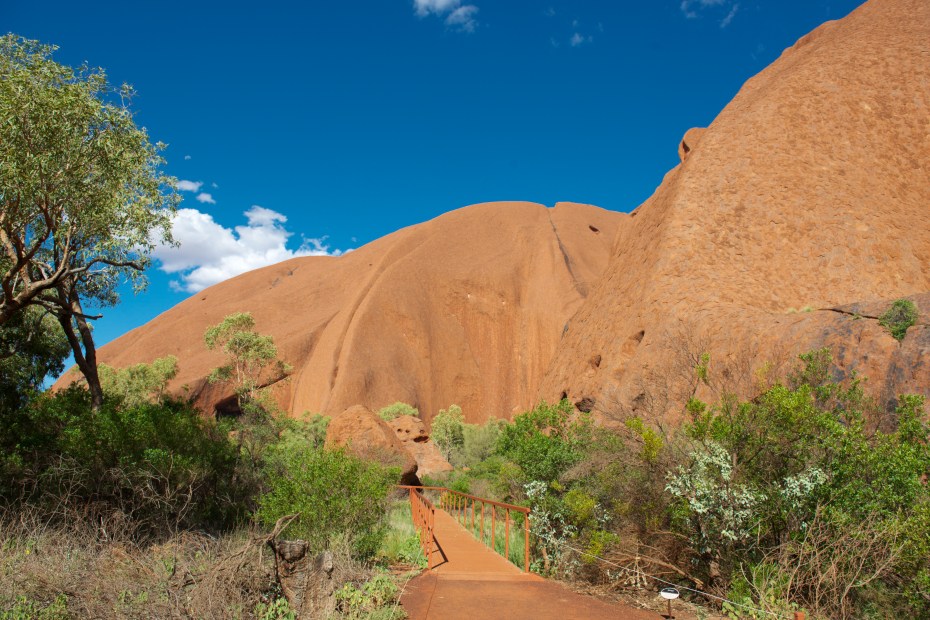
Rebecca and Uluru

Uluru up close-1

Uluru up close

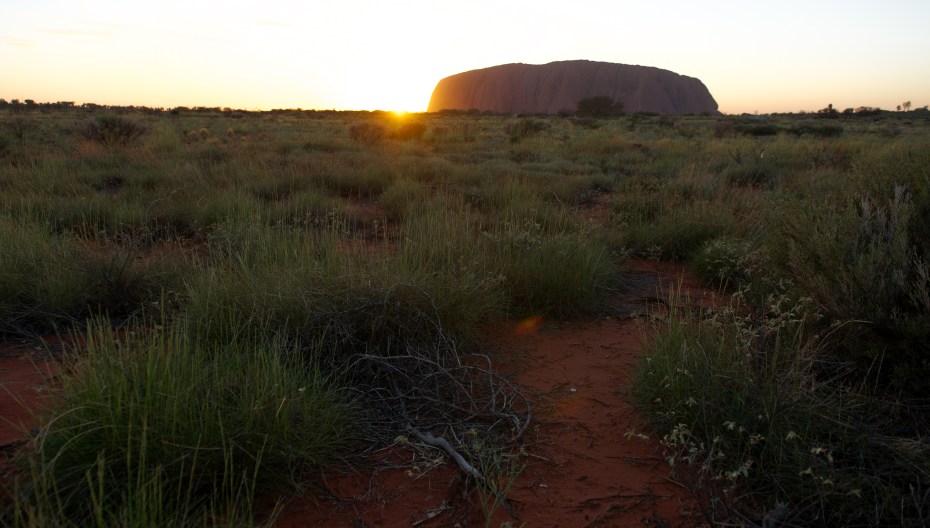
Uluru is notable for appearing to change colour at different times of the day and year, most notably glowing red at dawn and sunset.

Uluru sunriseUluru at sunrise

Uluru sunrise 1

We (the 22 of us on this tour) spent the night nearby at one of many purposely built permanent tent camps for tour companies. I slept outside in a “swag”. In Australia and New Zealand, a swag is a portable sleeping unit. It is normally a bundle of belongings rolled in a traditional fashion to be carried by a foot traveller in the bush. Before motor transport was common, foot travel over long distances was essential to agriculture in the Australian bush. It is sometimes referred to as a “backpack bed”. It is a canvas rectangular bag with a thim foam mattress inside. You either put a sleeping bag in it or linen sheets. I put a sheet on the mattress and slept on top of it. It has been so hot, even at night, you don’t need anything else.

Flies and mosquitoes as the sun comes up. Only millions of flies during the day. Flies and mosquitoes as the sun sets.

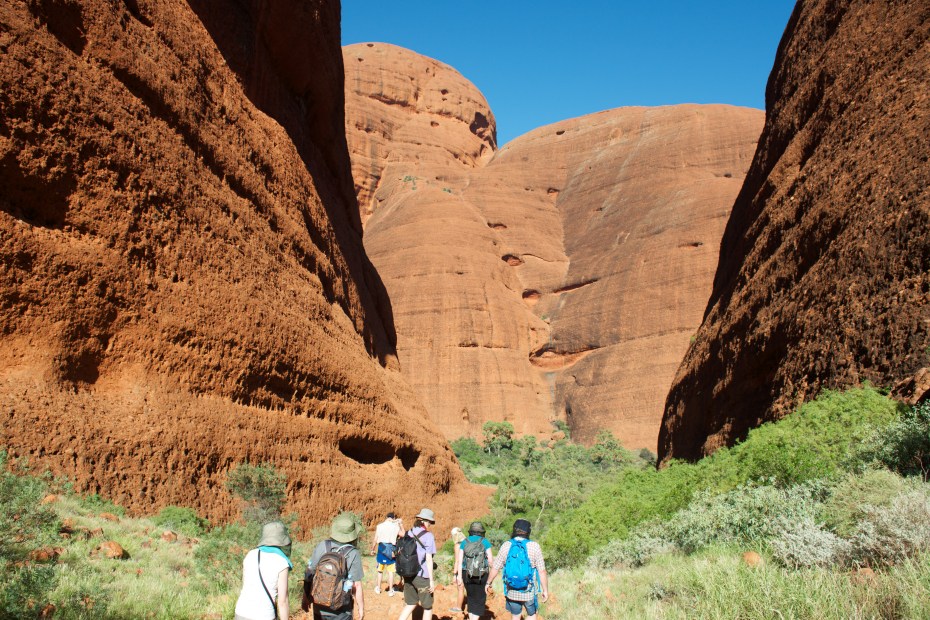
The next day we headed to the Kata Tjuta range and our first mini trek. 3 hours in the heat, up and down rock formations. And not given much time to stop and take photos. This is why I don’t like guided trips like this. I know they have to cater to everyone, so I grin or frown and bear it.
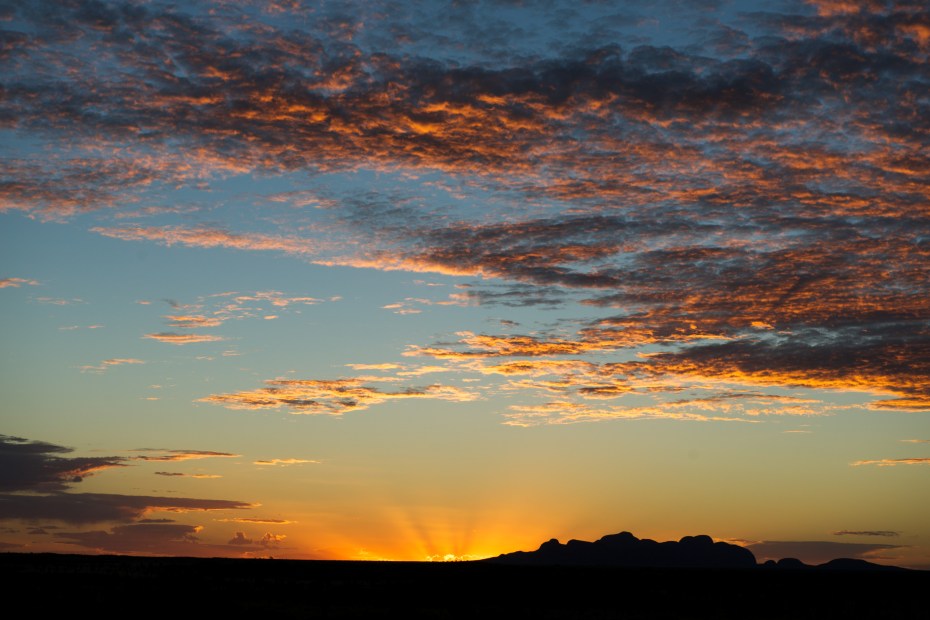
Kata Juta at sunset from near UluruKata Juta at sunset from near Uluru

Kata TjutaKata Tjuta

From Kata Tjuta we headed for Kings Creek Cattle Station and our second night in a bush camp. The cattle station is a working cattle ranch of over a million acres. You might ask “how do you find cattle scattered over a million acres of desert/bush?” As I did. Nope not helicopters. Nope not gps tagged cattle. It’s done with water. They have built lakes at various locations and fill them from a well at each location. You want cows at a specific spot, add water. Don’t want cows there, take away the water. It works the same with humans, no water no humans.

Flies and mosquitoes as the sun comes up. Only millions of flies during the day. Flies and mosquitoes as the sun sets.

After another night of amazing stars, it’s up again at 4:30am and an hours drive to Watarrka (Kings Canyon). And a “mind blowing” (tour company words) walk (see photo below for their definition of walk) through the towering walls of Watarrka. Well, Rebecca and I both agreed that we need to keep what’s left of our minds for the future, so we decided to take the “4 hour National Geographic route” instead of the “heart attack hill route”. Now the reason it took National Geographic 4 hours to do a 1 hour walk, is because they stopped to take photos and enjoyed their time there. Instead of blasting up and down rocky trails and only stopping to rest once in a while. In the summer, you are not allowed to start the mind blowing walk after 9am. It takes 3-4 hours and can get very hot. 100 degrees plus hot!  As it is tody. Even though we didn’t see the canyon from above, we saw and felt the canyon’s heart and soul. Where most of the animals and birds live. And enjoyed it very much. And…….we still have our minds.

Kings Canyon info


heart attack hill

Heart attack hill ‘walk’

Flies and mosquitoes as the sun comes up. Only millions of flies during the day. Flies and mosquitoes as the sun sets.
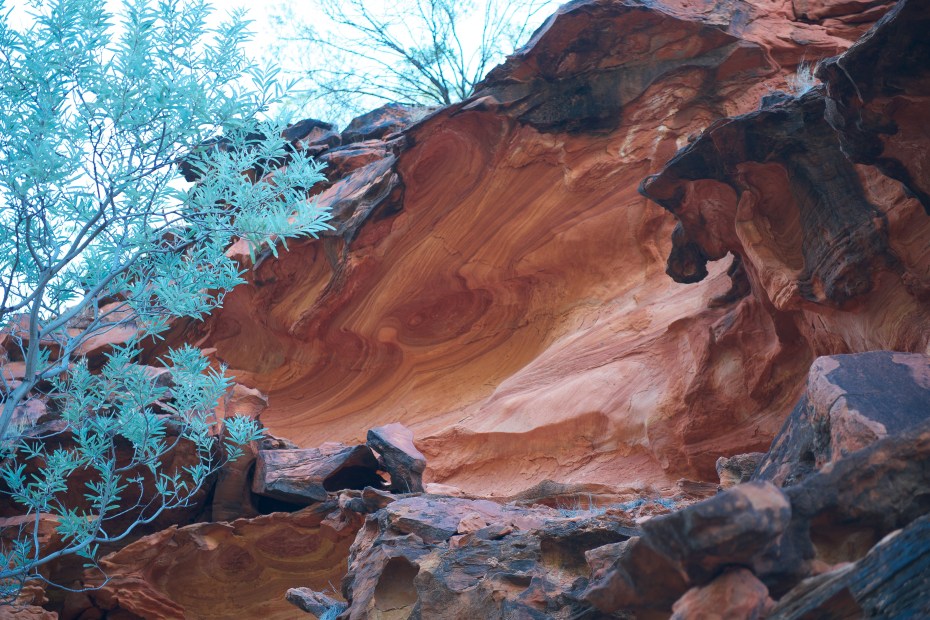
sandstone art

I have not modified this photo at all. The bush on the left was really that color. Beautiful natural art
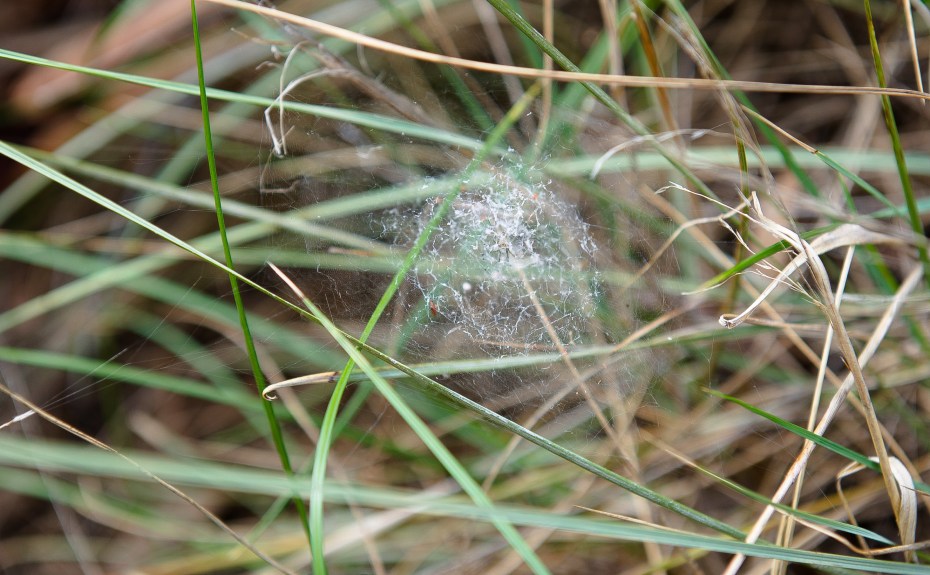
spider web in the shape of a ball

There is a little spider in the middle of that ball shaped web

After leaving the canyon, we head for Alice Springs and 2 welcomed nights in a nice hotel with cold water and a/c. And only a few flies. That is where I am writing this from. Tomorrow we head north and cross the Tropic of Capricorn with 5 people from the first part of the trip along with ? more.

Flies and mosquitoes as the sun comes up. Only millions of flies during the day. Flies and mosquitoes as the sun sets.

I will post again in about three days. Thanks for looking.


Categories: Uncategorized | 4 Comments

One last post before I transition from the cold to the heat

Sometimes it feels like weather systems come and go this fast in Scotland.

Valley & Maris house-1

View of valley from hill behind Maris’s house.


Categories: Uncategorized | 2 Comments

Drystane dykes and stone fanks

dry stone wall, also known as a dry stone dykedrystane dykedry stone hedgerock fence, or stone fence, is a wall constructed from stones without mortar to bind them together. As with any dry stone construction, the structural integrity arises from compressional forces and the interlocking of the stones. Such walls are used in building construction, as field boundaries, and on steep slopes as retaining walls for terracing.

Sheep fank, sheep stell, a (dry-stone) enclosure where sheep are gathered for shelter, dipping, shearing etc.

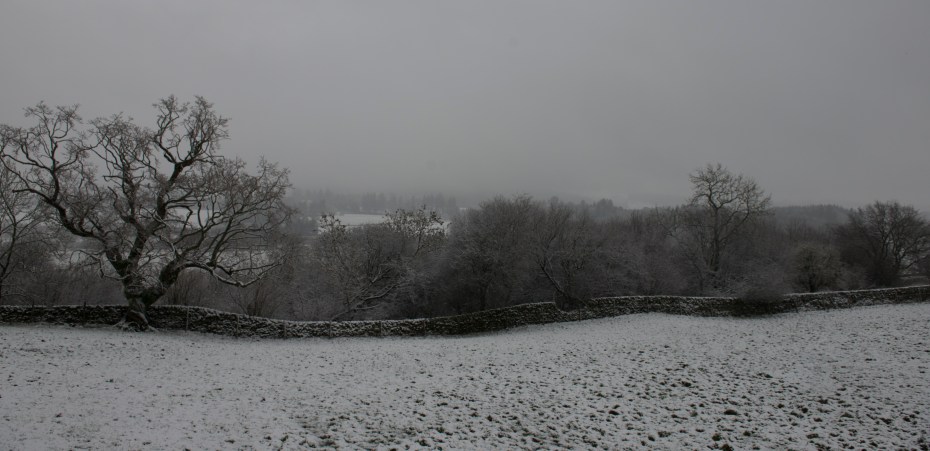
snow

One day of snow in the valley

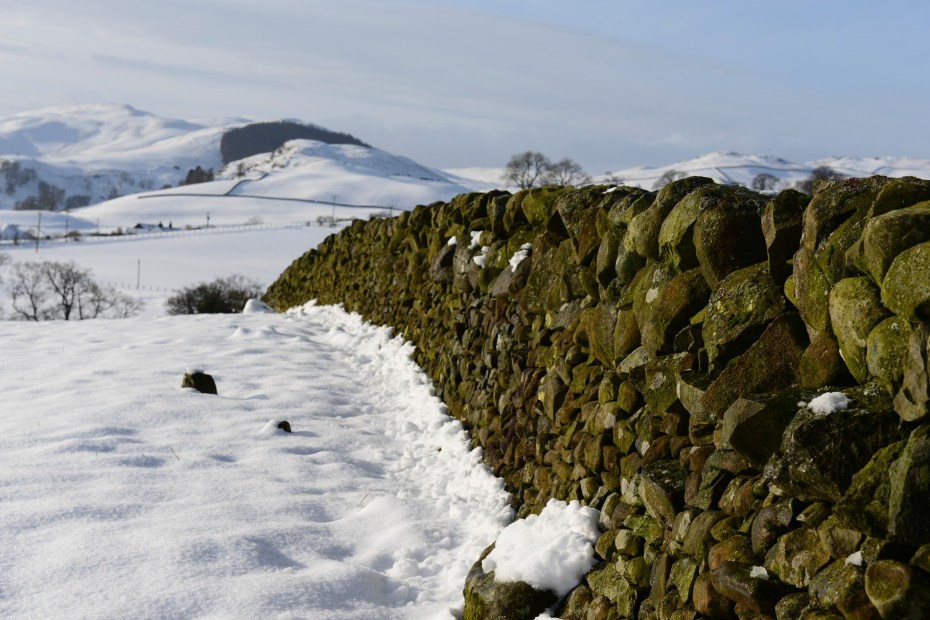
stone wall

These stone fences are everywhere in Scotland. They are very difficult to date but there are records of some being built around 1300. They are all unique to the part of the country they are built in. In the north they use granite, slate and sandstone. In the south they use Whinstone, a certain kind of stone only found there. You will notice that this Gall0way Fence, a particularly strong fence found only in this area, has the heavier stones on top. This compresses the whole structure and makes for a very strong fence. The fences themselves are very good wind brakes for sheep and shelters for birds and other small creatures.

Most of the fence material came from clearing the land. Some was quarried close to where the fence was built. As the fences were built farther and farther from a quarry, a new quarry was opened closer to where the fence was being built. Back in the heyday of fence building, a good craftsman could place a “Rood” (about 21′ or 3 meters) in a day. Some of the old-timers building these walls would grab the heaviest hammer they had and throw it up the hill as far as they could, they would then declare “this is how much wall I will build today”. Of course the weather had a lot to do with how much wall could be built in a day. A typical double wall weighs 1 ton per 7′ (2 meters) and is between 4-6 feet tall. The art of building these stone fences is fading away but in recent years there have been groups of concerned citizens trying to bring public awareness to the destruction and derelict state of some of the older walls. And there are classes for interested people that want to learn how to make a proper wall.

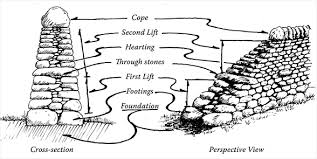
double stone wall

Cross section of a double dry stone wall

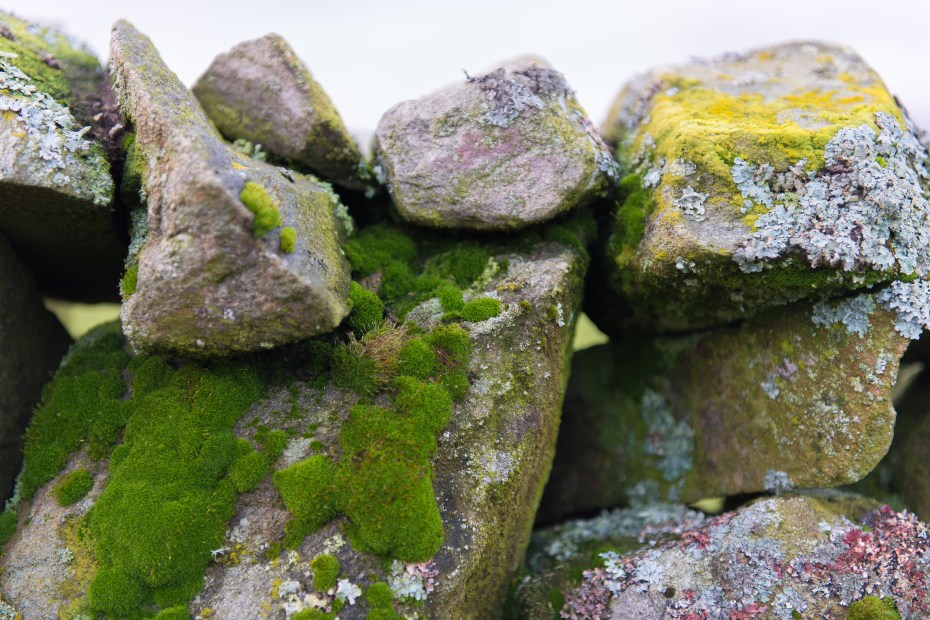
dry stones with Lichen

Dry stones with Lichen

Dry stone wall

This stone wall has gaps between the stones on purpose. It is done this way to discourage sheep and wolves from trying to jump over it because it looks unstable. I have read that some stone walls have gaps at the bottoms to allow rabbits to move from one field to another.

stone walls

Stone walls are pleasing to the eye, all-most no maintenance (well once every hundred years or so), are sustainable, sturdy and works of art. In my opinion.

Categories: Uncategorized | Leave a comment

Just a wee bit more rain!

Well it’s been raining again. And for one day we were on an island. No palm trees or beaches to be seen anywhere though. And a little cold. All of this water and I left my canoe at home!

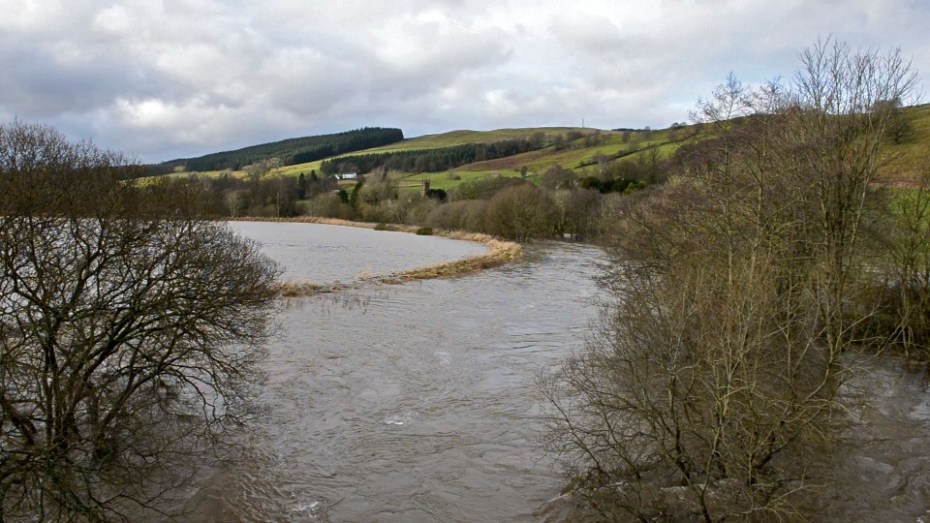
river over it's banks

The river is on the right and a flooded field, on the left.

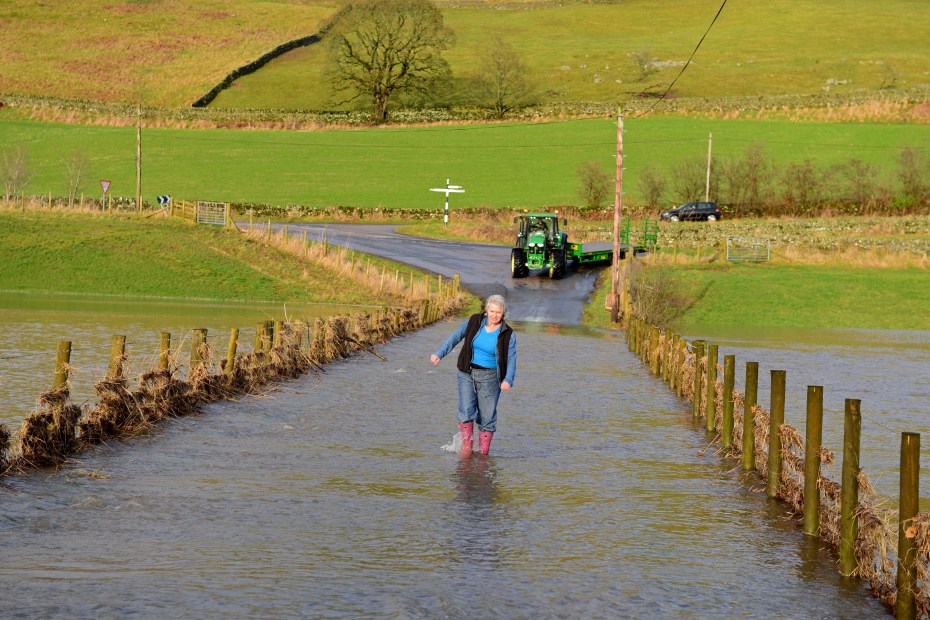
Jo Jo & flooded road 1

There is a pretty strong current flowing across this road. One of only two roads out. And both were flooded. The last time this road flooded, which was the day after I arrived, the water was as high as the fence posts.

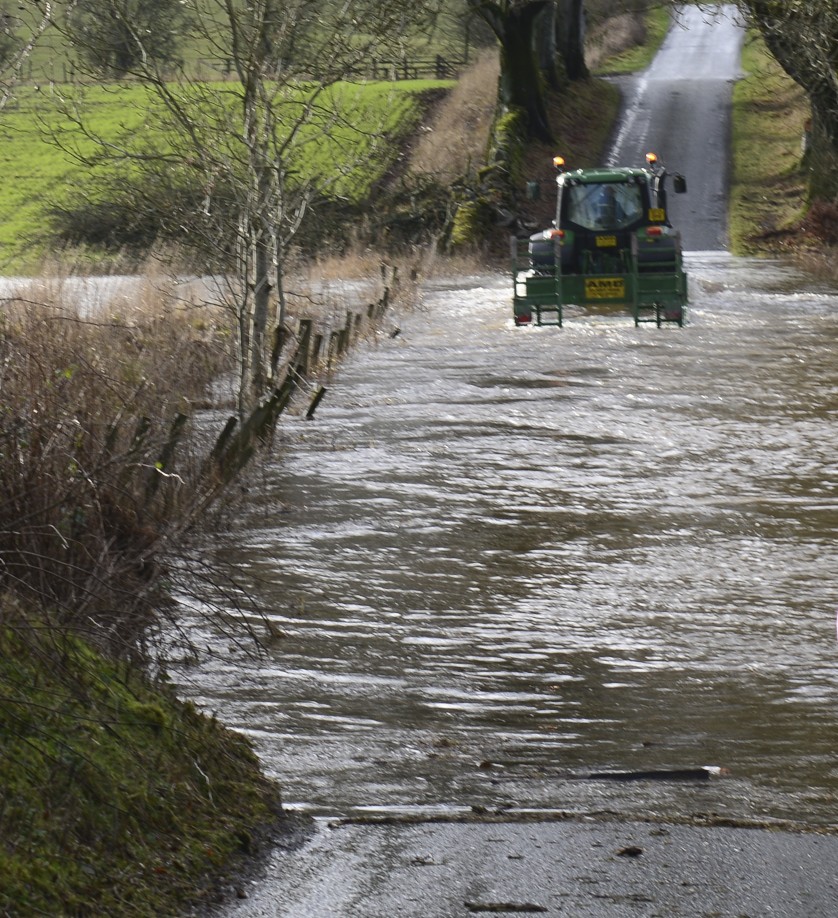
tractor & trailer on flooded road

The other road out (when it’s not flooded). This tractor is towing a trailer that was completely under water at the deepest point.

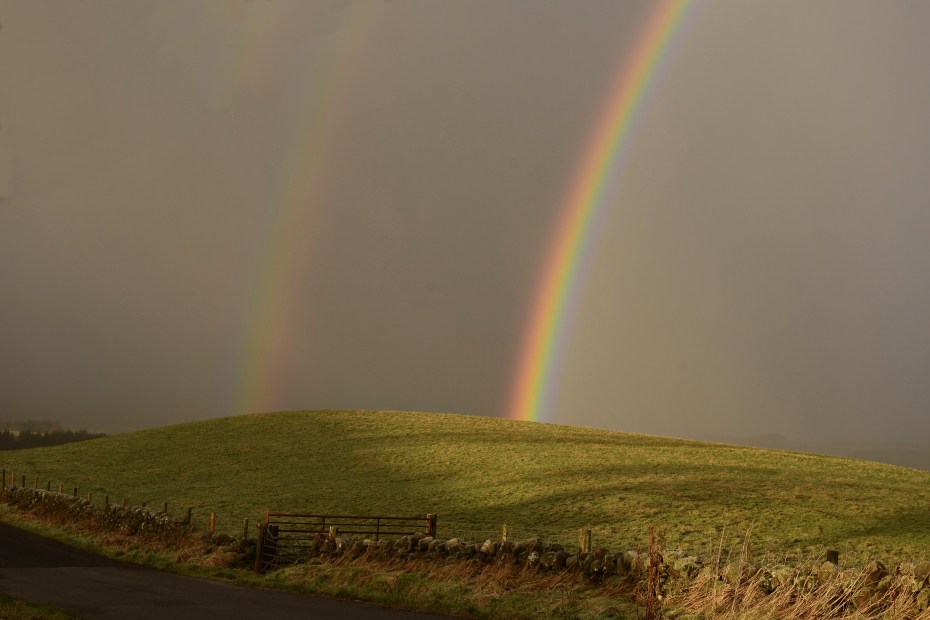
2x rainbow

All of the rain makes for beautiful rainbows!

Categories: Uncategorized | Leave a comment

Off to Australia in February

I will be heading to Australia in about two weeks and I’ve been looking into the cost of living there. I was told it was expensive but was a little shocked when I found the information below on a website.

$US2042: Cost of a basic health insurance policy in Australia, cheaper than the US, but more expensive than all 16 other countries surveyed.

$US28:  Cost of a standard men’s haircut in Australia. India has the cheapest cuts at $US3.19 and Tokyo the most expensive at $US44.57.

$US17: Cost of a pack of Marlboro cigarettes in Australia – the most expensive ciggies in the world. Manilla is the cheapest place to buy cigarettes at $US1.10 a pack.

$US17: Cost of a movie ticket in Australia, one of the most expensive tickets in the world. Cheapest is Mumbai at $US3.93 per movie.

$US38,500: Cost of a new Volkswagen Golf 2.0 TDI with no extras in Australia. In New Delhi you pay just $US18,577 but in Singapore you pay $US110,381.

$US139: Cost of a bouquet of 12 classic red roses delivered to your loved one’s door step in Australia – the most expensive place in the world to make such a gesture.

$US116: Cost of a pair of Levis 501 jeans in Australia, the third most expensive after Moscow and Paris.

$US70: Cost of a pair of Adidas Super Star 2 sports shoes in Australia – the third cheapest in the world after China ($US50) and India ($US64)

$US8.20: Cost of a pint of beer served in a bar Australia – the third most expensive in the world after France and Singapore.

$US3.55: Cost of a 2 litre bottle of Coca Cola in Australia – the most expensive Coke in the world.

$8.20 for a pint of beer! That’s the price you pay for one in an airport! I’ve  read a couple of explanations as to why things are so high there. A couple of them are that they actually pay a decent minimum wage, the median wage earners make a good wage and people keep moving there for the good weather. Well, mostly good weather.

The Australian dollar is worth a little less than the US dollar. So it’s not because of the exchange rate. Unlike the exchange rate here in the Uk where the US dollar is worth  $0.61. If you were to buy something here, say from Amazon Uk, for 200 British Pounds ($328) that same item in the US would cost you $200. Housing costs are cheaper here but food isn’t. And most people make a wage they can live on.

I asked a friend who lives in Australia if the above was true and she said it was. She also said that the minimum wage is double what it is in the US. So I’m sure that has something to do with the high cost of things. I wonder if the minimum wage has any effect on how many people are on the dole/welfare? It’s good to see that at least one country has a fair minimum wage.

me

sunrise

Categories: Uncategorized | 1 Comment

Back in Scotland

Well it’s good to be back in Scotland. The weather is as usual for this time of year. Wet, cold, wet, a little sunshine, wet and more wet. I guess that’s why every thing is green here. It rained so much the first day I arrived here, that the water went over the banks of the nearby river and cut us and a few other homes off from being able to leave. There was wide spread flooding over all of England and Scotland. We’ve had a few days of sunshine here and there, so it hasn’t been too bad. No cabin fever, yet. 

Scottish hills

Scottish hills

News Flash! Two front end loaders full of cow manure just arrived! Yes, they are for the garden to be. And Maris is wanting 2-3 more buckets full! If you could have seen the joy and smile on her face. I have never seen someone so overjoyed to be receiving cow poop. We leveled these two buckets off in preparation for some more to come in the next few days.

poop spreader

poop spreader

I guess I should explain about how the cow poop came to be. It comes from cows. The cows live on the same farm as Maris does. Along with lots of sheep. The cows do their business all of the time. Hence, lots of poop. The poop has to go somewhere, so the farm hands take it to the fields. They have so much of it, they gladly give it to overjoyed women who want it  plopped, literally, into their yard.

View across the valley from Maris's house

View across the valley from Maris’s new house

The main farm house across the valley

The main farm house across the valley

Categories: Uncategorized | Leave a comment

Back home

I’m back home now. And I have to update my last comments about the weather in Scotland. For the last 7 days that I was in Scotland the weather was gorgeous. Not suntan weather, but no rain, no snow and no wind. And I think the good weather is continuing as I write this.

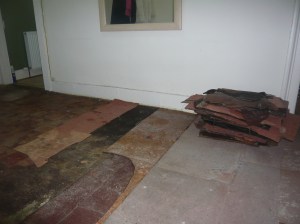
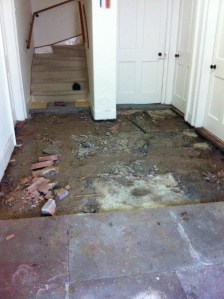
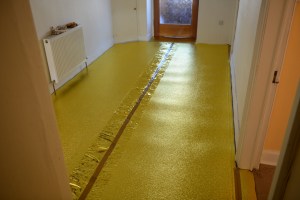
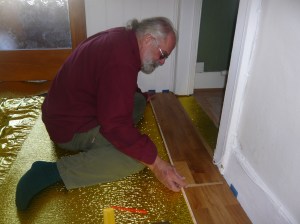
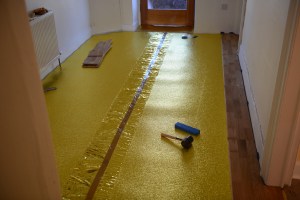
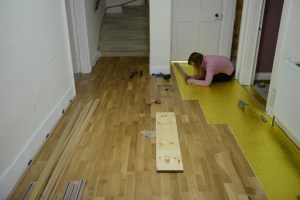
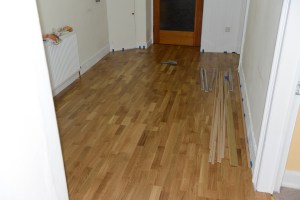
My friend Maris and I were able to install the engineered laminate floor in the hallway just before I left. And I mean just before….minutes before. We had been waiting on the new concrete floor to be completely dry before installing the new floor on top of it. We didn’t think it was going to be dry before I left so we installed 80% of the floor, made as many fitting cuts as we could and then uninstalled the flooring. Of course, as it happens, the next day we got the “go ahead” that the floor was dry! So we reinstalled everything in the next two days. Maris did all of the angle cuts on the trim and glued all of them in place. Along with fitting most of the flooring together and doing all of the final touchup sealing. What did I do you may ask……well besides cutting a few boards too short, I pushed the play button again so that we could listen to the same music over and over again. Yes I know, there is a repeat button, but getting up off of my knees gave me a break. Red Hot Chili Pipers, they are great if you haven’t heard them.

In the near future I may post some photos of the work we do and the places we travel to in California, if anyone would like to see them.

And I’m already thinking about my next trip this winter. It’s either Australia for 2 months or camping in Africa for 2 months. Not sure yet.

P1100729

IMG_1868

IMG_1872

P1100709

The white carpet and uneven floor that is getting removed. That’s Tara overseeing the project.

P1100724

The layers of linoleum and tarpaper under the carpet and on top of the sandstone slabs.

IMG_1883

Sandstone slabs and soil underneath.

P1100776

Plastic before the new concrete floor.

DSC_2374

Real gold color underlay.

P1100799

Installing first row.

DSC_2375

DSC_2376

DSC_2379

Maris measuring for my cut. If I measured, it was usually wrong. Eyesight maybe? Or just old!

DSC_2381

DSC_2383

Maris is actually working. The foot of the chair she is sitting in is keeping some recently glued trim from moving and she is keeping the chair from moving.

Categories: Uncategorized | Leave a comment

Three months in three minutes!

The weather hasn’t been very good here lately for taking photos. It’s either raining, snowing, windy or dark. Just like Scotland is supposed to be. So I’ve had a lot of “inside time”. And I put together a little video of my trip. I had to reduce the quality to get it to upload. The original looks pretty good, so I hope this one looks similar. The music is from “Wide Spread Panic” and the turtle is from “Slew Designs”. Hope you like it.

Categories: Uncategorized | 2 Comments

Blog at WordPress.com.